How to Read Antique Furniture Marks in 2026
Learn how to read antique furniture marks in our 2026 guide. Discover maker stamps, wood clues, and AI tools to authenticate vintage finds.

If you have uncovered a heavy, intricately carved dresser in a dusty barn or spotted a beautifully patinated side table at an estate sale, determining its origins is the critical first step. The short answer to how to read antique furniture marks involves locating hidden stamps beneath drawers, decoding alphanumeric maker symbols, and cross-referencing patent dates with historical manufacturing records to establish true provenance.
Why Knowing How to Read Antique Furniture Marks Matters in 2026
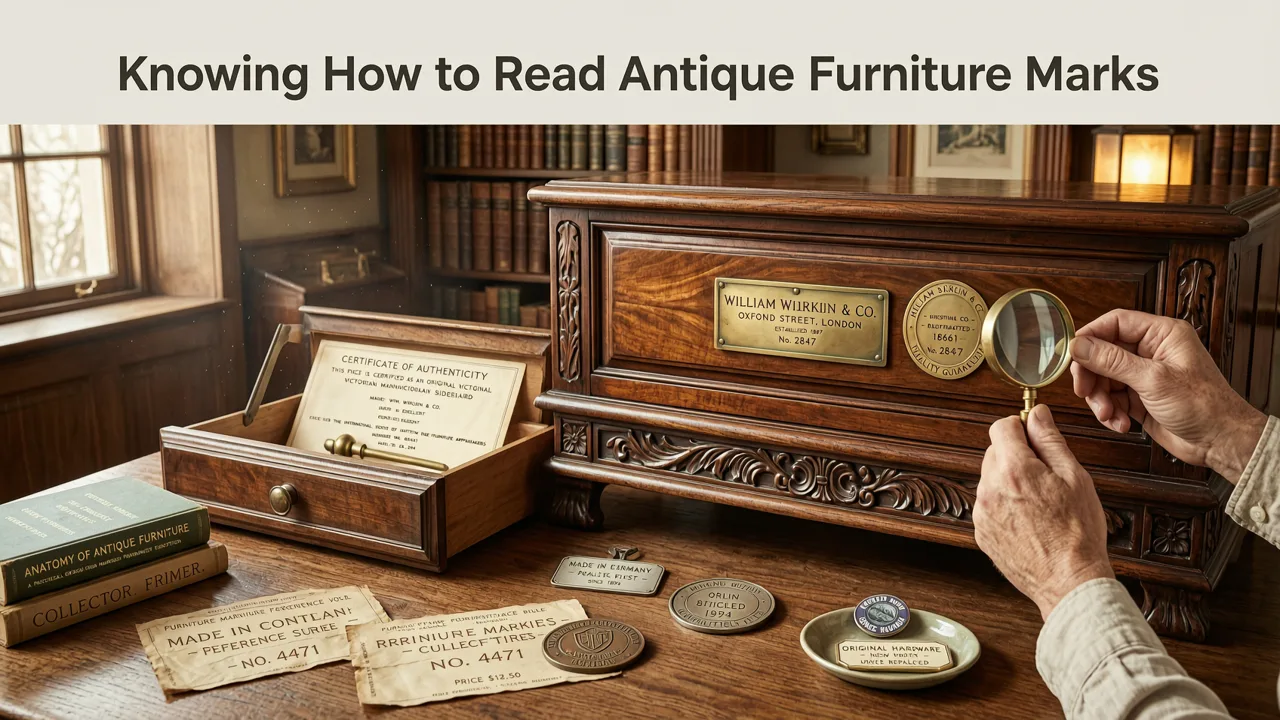
The antique market has evolved dramatically over the last decade. High-quality reproductions and digitally aged fakes are more prevalent than ever, making the ability to verify authenticity a vital skill for collectors, resellers, and estate liquidators. Understanding the subtle language of maker's marks, retailer labels, and patent stamps provides a direct line to a piece's history, origin, and potential value.
In 2026, the intersection of traditional knowledge and modern technology has transformed authentication. While digital tools can analyze faint impressions, the foundational skill of knowing where to look and what the symbols mean remains irreplaceable. Recognizing these marks separates a generic vintage find from a documented historical artifact.
The Core Steps: How to Read Antique Furniture Marks by Sight and Touch

Reading furniture marks is not just about looking at the obvious front-facing labels. It requires a systematic, tactile approach to uncover the hidden identifiers that manufacturers placed in less visible areas.
Locating the Hidden Stamps and Carvings
Manufacturers historically placed marks in areas that would not interfere with the aesthetic design of the piece. To find them, you must inspect the following locations thoroughly:
- Undersides and Bottoms: Flip chairs, tables, and cabinets over. The primary structural stamp is often burned or inked directly into the raw wood of the bottom rail or seat frame.
- Inside Drawer Cavities: Pull drawers out completely and examine the interior sides, the bottom board, and the back panel. Look for inked labels or paper tags that may have partially degraded.
- Backboards and Rear Stiles: Many cabinetmakers stamped the back of case pieces, such as wardrobes, highboys, and secretaries, near the top edge.
- Underneath Table Leaves: For dining tables, check the underside of the leaves and the central apron.
Use a high-lumen flashlight and view the wood at a low, raking angle. This technique casts shadows into shallow carvings and faded ink, making nearly invisible impressions legible.
Decoding the Symbols, Numbers, and Letters
Once you locate a mark, the next phase is translation. Marks generally consist of a combination of the manufacturer's name, a location (city and state or country), and occasionally a sequence of numbers. Early 18th-century marks might simply feature the craftsman's initials, while later 19th-century marks often include full company names and established dates.
Common Types of Furniture Marks and What They Mean

Not all marks serve the same purpose. Understanding the distinction between a maker's mark, a patent date, and a retailer label is crucial for accurate dating and valuation.
Maker's Marks and Manufacturer Stamps
These are the most valuable identifiers. A maker's mark directly attributes the piece to a specific workshop, factory, or craftsman. In the 18th and early 19th centuries, these were often hand-carved or burned into the wood with a custom metal brand. By the late 19th century, factories transitioned to paper labels or inked rubber stamps. If you find a clear maker's mark, you can trace the company's operational dates to establish a strict window of manufacture.
Patent Dates and Design Registrations
This is the most common source of confusion for new collectors. A patent date stamped on a piece of furniture indicates when the specific design, mechanism, or hardware was legally registered by the patent office. It does not indicate the date the furniture was actually built. A chair featuring an 1885 patent date for its reclining mechanism could have been manufactured in 1910. Always use patent dates as a "not-before" benchmark rather than a definitive creation date.
Retailer and Department Store Labels
Many antique pieces bear the label of the retailer rather than the manufacturer. High-end department stores, such as Waverley or early Macy's, often commissioned furniture from various workshops and applied their own branded paper labels or foil stamps. While these labels confirm the piece was sold through a prestigious vendor, they require additional research to identify the actual factory that constructed the item.
Visual Aid: Quick Reference Table for Furniture Mark Eras
The following table provides a generalized guide to the evolution of furniture marking styles, helping you narrow down the era of your piece before diving into specific database searches.
| Historical Era | Typical Mark Style | Key Characteristics and Materials |
|---|---|---|
| 18th Century | Hand-carved or burned | Irregular lettering, often just initials or a simple surname; deeply impressed into raw wood. |
| Early 19th Century | Stamped ink or paper labels | Faded iron gall ink, brittle paper labels, early manufacturer names with city/state locations. |
| Late 19th Century | Brass plates or rubber stamps | Standardized fonts, brass tags nailed to the back, patent dates frequently included. |
| Early to Mid-20th Century | Printed labels or foil stamps | Clear typography, retailer logos, "Made in" country of origin tags, standardized model numbers. |
When Marks Are Missing: Identifying Furniture Without Stamps
It is entirely common to encounter beautiful antique furniture that lacks any visible maker's mark. Labels fall off, ink fades, and the wood bearing a stamp may have been replaced or sanded down during a past restoration. When marks are absent, authentication relies on secondary physical evidence.
Analyzing Construction and Joinery
The way a piece is put together is a massive indicator of its age. Hand-cut dovetails, which exhibit slight irregularities and a narrow, uneven profile, strongly point to pre-1860 construction. Conversely, uniform, machine-cut dovetails indicate a post-1890 factory-made piece. Additionally, examining the saw marks on the underside of drawer bottoms can reveal whether the wood was cut by a pit saw (straight, irregular lines) or a circular saw (continuous, curved arc lines).
Examining the Wood and Patina
Identifying the primary and secondary woods used in construction provides vital clues. For a deeper dive into material analysis, reviewing resources like the How to Identify Antique Furniture Wood: The 2026 Guide can help you distinguish between mahogany, walnut, oak, and pine. Furthermore, analyzing the patina—the natural oxidation and wear pattern on the surface—can confirm if the piece has aged consistently over a century, rather than being artificially distressed.
Leveraging AI for Antique Furniture Authentication in 2026
The integration of artificial intelligence into antique identification has been a game-changer for the collecting community. Modern multimodal AI models are trained on vast datasets of historical catalogs, hallmark databases, and maker's marks. When you encounter a faded stamp or a partially torn paper label, AI vision tools can enhance the low-contrast image and predict the missing characters based on historical manufacturing patterns.
The underlying architecture of these tools relies on advanced image recognition capabilities, as detailed in the OpenAI documentation, allowing the software to process visual anomalies and cross-reference them against millions of known furniture attributes. However, it is vital to approach these tools responsibly. Following the Google AI guidance on responsible deployment, AI should be used as an assistive diagnostic tool rather than a definitive replacement for human expertise.
When AI provides a potential identification but the provenance remains unclear, or when you are dealing with high-value investment pieces, the next logical step is to consult a human specialist. You can find verified professionals through directories that specialize in connecting collectors with certified evaluators, such as the guide on Antique Appraisal Near Me: How to Find Trusted Experts in 2026.
Conclusion and Next Steps
Mastering how to read antique furniture marks requires patience, the right lighting, and a solid understanding of historical manufacturing practices. By systematically inspecting hidden areas, distinguishing between patent dates and manufacture dates, and analyzing construction techniques, you can confidently authenticate your finds and uncover their true historical significance.
Whether you are evaluating a thrift-store discovery or cataloging a complex estate inheritance, technology can bridge the gap between a faded stamp and a confirmed history. To streamline your identification process and leverage the latest visual recognition tools, download and use the Antique Identifier app today to instantly analyze your vintage furniture marks.
Frequently Asked Questions
Is a patent date the same as the manufacturing date?
No. A patent date indicates when the specific design, mechanism, or hardware was legally registered by the patent office, which can be years or even decades before the actual piece of furniture was manufactured.
Where are furniture maker marks typically hidden?
Maker marks are most commonly found on the underside of the piece, inside drawer cavities, on the backboards, or along the rear stiles. They are rarely placed on the front-facing aesthetic surfaces.
Can AI accurately identify faded furniture stamps?
Yes, modern multimodal AI models can enhance low-contrast images and recognize partial stamp impressions that the human eye might miss, though physical verification by an expert is still recommended for high-value items.
What if my antique furniture has no marks at all?
If a piece lacks stamps or labels, authentication relies on secondary evidence such as joinery techniques, wood species identification, tool marks, and overall patina to determine its age and origin.
Related Articles


Explore more practical antique identification and appraisal guides.
View all articles