Vintage Collectibles Identification Guide (2026)
Use this vintage collectibles identification guide to spot marks, date eras, and estimate value. Learn proven steps, tools, and tips trusted by collectors in 2026.

Vintage Collectibles Identification Guide (2026)
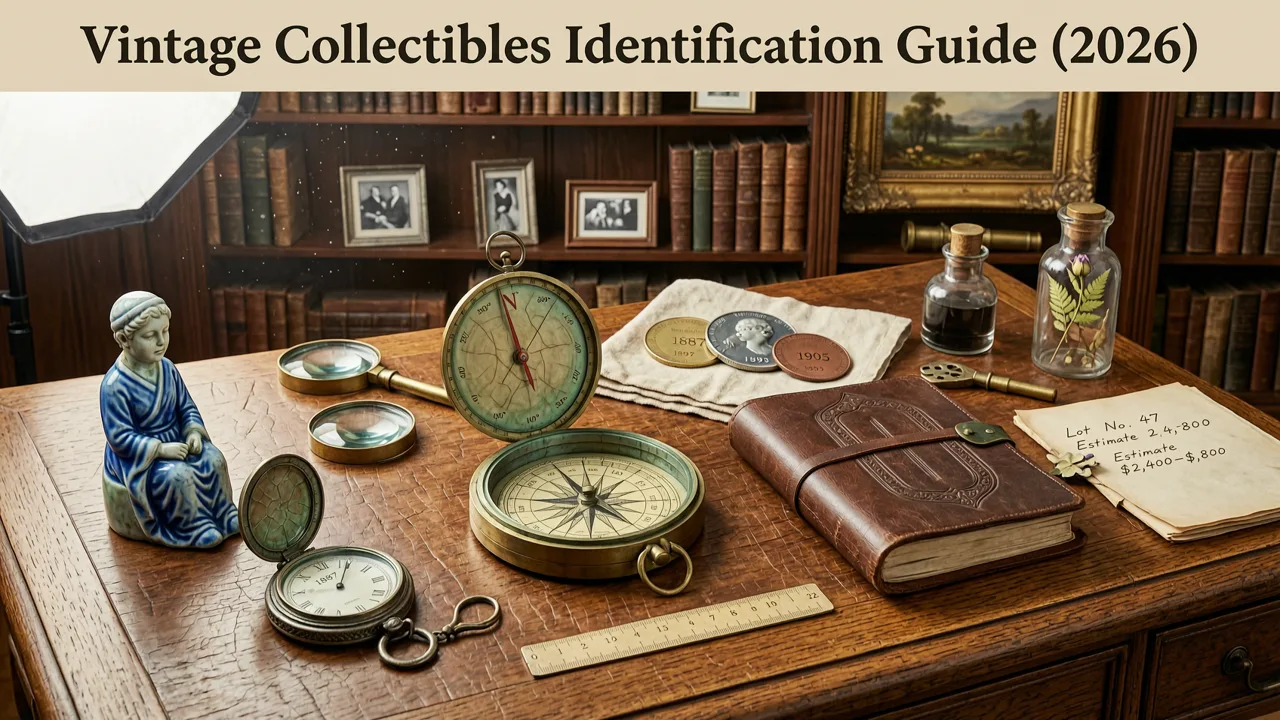
Finding a dusty piece in a garage, at an estate sale, or tucked behind a shelf can feel like unearthing a small mystery. The question is always the same: what is it, how old is it, and is it worth anything? This vintage collectibles identification guide gives you a clear, step-by-step framework to answer those questions with confidence in 2026, whether you are a first-time thrift shopper or a seasoned reseller building inventory.
The short version: start with what you can see and feel, check for maker's marks and construction clues, cross-reference trusted databases, and use modern AI identification tools to narrow possibilities quickly. What follows is a practical roadmap that mirrors how professional appraisers and serious collectors actually work through an unknown object.
Why a Structured Identification Process Matters in 2026

The antiques and collectibles market has shifted again over the last few years. Mid-century modern continues to hold strong, Depression-era glass is seeing renewed interest among younger collectors, and Asian export porcelain is being re-evaluated as new auction data emerges. At the same time, AI-powered identification tools have matured enough to become a legitimate first step in the research process, as documented in Google's AI responsibility guidance on using machine learning for consumer-facing applications.
A structured process prevents the two most common mistakes collectors make: assuming something is older than it is based on style alone, and assigning value based on a single eBay listing. A disciplined approach saves time, protects you from overpaying at estate sales, and helps you build a collection with genuine historical and financial merit. For a broader look at what categories are performing well this year, see our breakdown in Antiques Worth Money in 2026.
The 7-Step Vintage Collectibles Identification Framework

Every object tells a story through its materials, construction, marks, and wear patterns. Here is the framework professional dealers and appraisers use, adapted for everyday collectors.
Step 1: Document the Object Thoroughly
Before you research anything, photograph the piece in natural light from multiple angles. Capture the top, bottom, back, sides, any signatures or stamps, and close-ups of distinctive details like joints, seams, or glaze patterns. Note the dimensions, weight, and any odors (old wood smells different from new wood; certain glazes have a distinctive scent). This documentation becomes your reference file and is essential if you later use an AI identifier or consult a specialist.
Step 2: Identify the Material
Material is the single most important starting filter. Is it glass, ceramic, metal, wood, textile, paper, or a composite? Simple tests help: a magnet reveals iron or steel; a blacklight highlights certain glass formulas and repair glues; a loupe reveals weave patterns in textiles and grain in wood. Once you know the material, your research universe shrinks dramatically.
Step 3: Look for Maker's Marks, Stamps, and Signatures
Maker's marks are the collector's shortcut. They appear on the bottom of ceramics, the back of silver, the underside of furniture, and the labels inside vintage clothing. Use a magnifying glass or your phone's macro mode. Compare any marks you find against reference databases like Kovels, Replacements Ltd, or the Vintage Glassware Identification Guide on this site. A confirmed maker often narrows production dates to a specific decade.
Step 4: Assess Construction and Design Clues
How something is built often reveals its age more reliably than how it looks. Dovetail joints, nail types, screw slots, and seam placements all shifted across manufacturing eras. For example, machine-cut dovetails became standard in American furniture after the 1860s, and Phillips-head screws did not appear until the 1930s. Design motifs also help: Art Deco geometry, Atomic Age curves, and Postmodern pastiche each point to distinct periods.
Step 5: Evaluate Condition and Patina Honestly
Condition affects value, but patina can confirm age. Genuine old surfaces show consistent wear, oxidation, and color shifts that are difficult to fake convincingly. Be cautious of pieces that look uniformly aged or that have suspiciously pristine surfaces on a supposedly old object. Ask yourself: does the wear pattern match how the object would have been used?
Step 6: Cross-Reference With Trusted Sources
Compare your findings against at least two reliable sources before drawing conclusions. Auction records from LiveAuctioneers, Invaluable, and Heritage Auctions provide realized prices, which are far more meaningful than asking prices on retail sites. Museum collections and scholarly catalogs offer authoritative attribution. Community forums and collector groups can provide second opinions, but treat them as leads, not final verdicts.
Step 7: Use AI Identification Tools as a Fast-Track Aid
Modern image-recognition models can analyze a photograph and return probable matches, suggested makers, and era estimates in seconds. These tools work best when you provide the clear documentation from Step 1. Think of AI as a research assistant that points you toward the right reference books and databases, not as a replacement for hands-on examination. For a deeper discussion of how technology is reshaping appraisal workflows, see our Antique Appraisal Cost Guide.
Common Categories of Vintage Collectibles and What to Look For
Different categories demand different identification skills. Here is a quick-reference overview of the most actively collected vintage categories in 2026.
| Category | Key Identification Clues | Common Pitfalls |
|---|---|---|
| Vintage Glassware | Pontil marks, mold seams, pattern names, UV fluorescence | Reproductions of popular patterns from the 1970s onward |
| Pottery and Porcelain | Backstamps, glaze color, foot ring style, transfer vs. hand-painted | Later marks added to unmarked blanks to inflate value |
| Mid-Century Furniture | Joinery, veneer patterns, hardware, manufacturer labels | Married pieces and "franken-furniture" assembled from parts |
| Vintage Clothing and Textiles | Tag styles, union labels, zipper types, fabric composition | Garments redated by removing modern tags |
| Vintage Toys and Tin | Lithography style, manufacturer marks, original packaging | Reproductions sold as "vintage-style" at flea markets |
| Antique Silver and Metalware | Hallmarks, assay marks, weight, solder patterns | Electroplated pieces passed off as solid silver |
How to Spot Reproductions and Fakes
The reproduction market has grown more sophisticated, and in 2026, high-quality fakes can fool even experienced eyes if you rely on appearance alone. Here are the most reliable telltale signs across categories.
- Too-perfect symmetry in handcrafted objects. Genuine antiques show small variations that mass production eliminates.
- Incorrect materials for the claimed era. A "19th century" piece with Phillips-head screws or modern particleboard is a red flag.
- Anachronistic marks or stamps that did not exist when the piece was supposedly made.
- Uniform patina that does not match realistic use patterns. Real wear concentrates on contact points.
- Weight discrepancies. Older glass and metal often feel different from modern equivalents due to different manufacturing formulas.
When in doubt, walk away. The cost of a missed deal is always less than the cost of a confirmed fake.
Estimating Value: A Realistic Approach
Identification is only half the equation. Once you know what you have, you need to understand what it is actually worth in today's market. Value depends on condition, rarity, current collector demand, and the sales channel. Auction results, dealer retail prices, and private-sale values can differ by 40 percent or more for the same object.
Start by searching completed sales on major auction platforms using the maker, pattern name, and approximate date you identified. Filter for pieces in comparable condition. If you need a formal valuation for insurance or estate purposes, professional appraisal is the right next step. For a quick reality check on whether a piece is worth the effort of selling, our 2026 Value Assessment guide walks through the key decision points.
Building a Reference Library for Ongoing Identification
Even with AI tools at your fingertips, a solid reference library remains invaluable. The best collectors maintain a mix of print and digital resources.
- Category-specific guides for your primary collecting areas, updated editions preferred.
- Maker and mark dictionaries covering ceramics, silver, glass, and furniture.
- Auction archive access through platforms like LiveAuctioneers or Invaluable for realized price data.
- Museum collection databases for authoritative attribution and provenance research.
- AI identification apps like Antique Identifiers for fast preliminary matches and cross-referencing.
Review and update your library annually. The collectibles market evolves, new research emerges, and auction trends shift. A collector who stopped reading reference books in 2015 is working with outdated assumptions in 2026.
When to Call in a Professional
Some pieces genuinely require expert eyes. If you suspect you have something from a high-value category, if the object has unusual provenance, or if your preliminary research returns conflicting information, it is time to consult a specialist. Accredited appraisers, auction house specialists, and museum curators can provide authoritative opinions that protect you from costly mistakes.
Professional appraisal also makes sense when you need documentation for insurance, estate division, or charitable donation. The cost varies by object type and purpose, but it is almost always worthwhile for pieces you believe may be significant.
Final Thoughts: Identification as a Skill That Compounds
Every piece you identify correctly makes the next one easier. You develop an eye for construction, a feel for materials, and an intuition for when something does not quite add up. The vintage collectibles identification guide above is a starting framework, but the real education happens in the field, at the table, and in the research.
Whether you are building a collection for love, for profit, or both, disciplined identification is the foundation. It protects your investment, deepens your appreciation, and connects you to the history embedded in every object you handle.
Ready to put this framework to work on a piece you have been wondering about? Open the Antique Identifiers app, snap a photo, and let AI-assisted identification give you a head start on your research. Your next great find might already be sitting on your shelf.
Frequently Asked Questions
What is the fastest way to identify a vintage collectible?
Start by photographing the piece in natural light from multiple angles, then look for maker's marks, stamps, or labels. Use an AI identification tool like Antique Identifiers to get preliminary matches, and cross-reference those results with trusted databases and auction archives for confirmation.
How can I tell if a vintage collectible is a reproduction?
Check for anachronistic construction methods like modern screws on a supposedly 19th-century piece, overly uniform patina, incorrect materials for the claimed era, and marks or stamps that did not exist at the time. Genuine antiques show natural wear concentrated on contact points and small variations from hand craftsmanship.
Does finding a maker's mark guarantee a collectible is valuable?
No. A maker's mark confirms origin and helps date the piece, but value depends on rarity, condition, current collector demand, and sales channel. Some marked pieces from well-known makers are common and modestly priced, while unmarked pieces in high-demand categories can be quite valuable.
Should I use AI tools or consult a human expert for identification?
Use both. AI identification tools are excellent for fast preliminary matches and narrowing your research direction. For high-value pieces, formal appraisals, or cases where research returns conflicting information, consult an accredited appraiser or auction house specialist for authoritative confirmation.
How often do identification methods and market values change?
Market values shift continuously based on collector demand and auction trends. Identification methods evolve more slowly, but new research, newly discovered marks, and updated reference materials emerge regularly. Review your reference resources at least annually to stay current.
Related Articles


Explore more practical antique identification and appraisal guides.
View all articles