Vintage vs Antique Value Difference: What Collectors Must Know in 2026
Learn the vintage vs antique value difference in 2026: age thresholds, rarity, condition, and market trends that separate a vintage find from a true antique.

Vintage vs Antique Value Difference: The Short Answer

If you have ever stood in an estate sale holding a brass candlestick and wondered whether it is a hundred-dollar antique or a twenty-dollar vintage piece, the answer usually comes down to one number: one hundred years. In the collecting world, the vintage vs antique value difference is anchored by age, but it is shaped just as much by rarity, condition, provenance, and current buyer demand. An antique is generally defined as an item at least 100 years old, meaning anything made on or before 1926 qualifies today. A vintage item is younger—typically 20 to 99 years old—and its value is driven more by style, brand recognition, and trend cycles than by sheer age.
Understanding the vintage vs antique value difference matters whether you are buying, selling, insuring, or simply curious. This guide walks through the definitions, the pricing factors, and the 2026 market realities so you can make confident decisions the next time you spot a mysterious piece at a flea market.
How Age Defines Antique and Vintage Categories
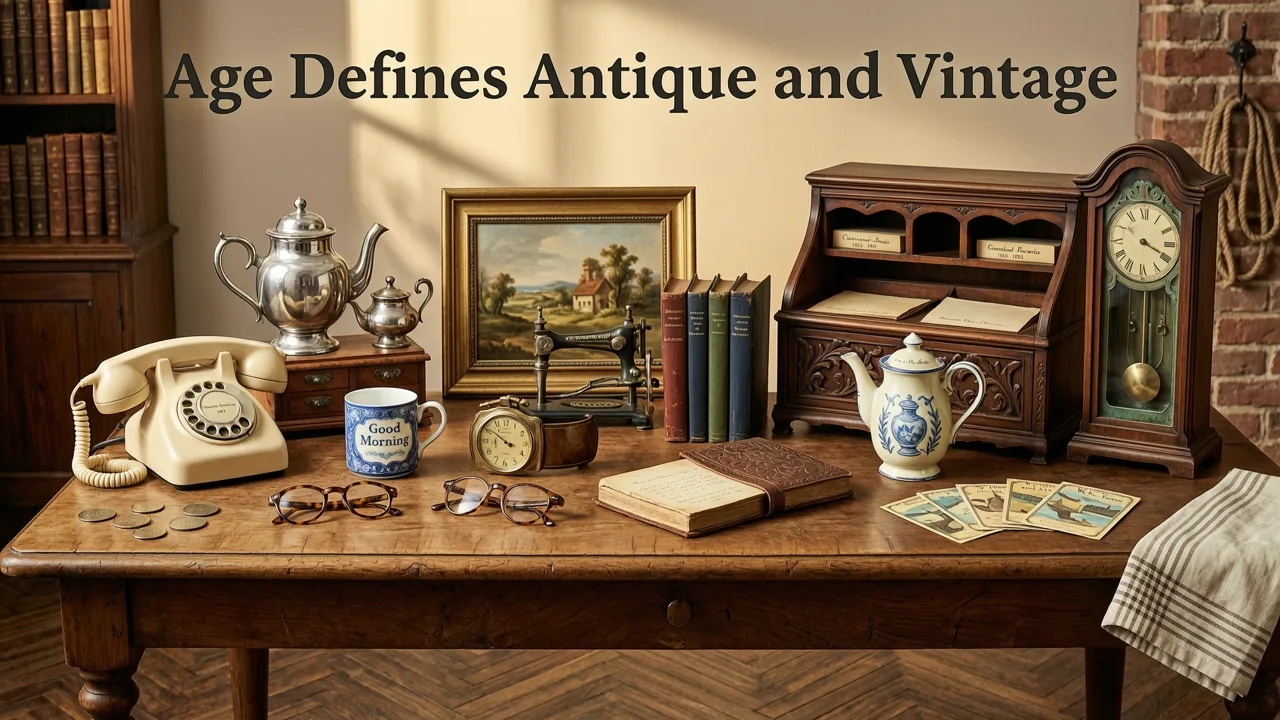
The United States Customs Service originally set the 100-year threshold for antiques in the early twentieth century, and that standard has held firm across auction houses, insurance policies, and dealer catalogs. Anything crafted in 1926 or earlier is, by definition, an antique in 2026. Items made between roughly 1927 and 2006 fall into the vintage category, while pieces younger than two decades are usually labeled modern, contemporary, or simply used.
Why the 100-Year Line Still Matters
The century mark is more than tradition. It determines import-duty classifications, estate-tax documentation, and how auction houses catalog lots. When a piece crosses the 100-year threshold, it often gains a formal antique designation that can unlock higher insurance appraisals and access to specialized buyer pools.
The Rolling Vintage Window
Vintage is a sliding category. In 2026, collectible vintage includes Mid-Century Modern furniture from the 1950s, 1980s designer denim, and early-2000s electronics that nostalgia-driven collectors now seek. As each year passes, the vintage window rolls forward, pulling new decades into the collectible fold.
Key Factors That Drive the Vintage vs Antique Value Difference

Age alone does not set price. Two objects from the same year can differ in value by a factor of fifty based on the variables below.
1. Rarity and Production Numbers
Limited production runs, factory errors, and short-lived design experiments create scarcity that pushes prices upward. A mass-produced 1890s pressed-glass pitcher may sell for under fifty dollars, while a one-of-a-kind art pottery vase from the same decade can command five figures.
2. Condition and Originality
Collectors pay premiums for untouched surfaces, original finishes, and intact hardware. Professional restoration can preserve value, but amateur repairs often reduce it. For vintage items, original packaging and tags add significant value—something rarely relevant for antiques, where packaging almost never survives.
3. Provenance and Documentation
A signed receipt, a factory ledger entry, or a photograph of the piece in a historic home can multiply value. Provenance matters more for antiques because the chain of ownership helps confirm age and authenticity. For vintage collectibles, provenance often involves celebrity ownership or pop-culture milestones.
4. Maker Marks and Signatures
Identifiable makers—Tiffany, Stickley, Hermès, Lalique—carry built-in demand. If you need help reading hallmarks or maker stamps, an antique identifier app can cross-reference thousands of marks in seconds.
5. Market Demand and Trend Cycles
Antique values tend to move slowly, rising or falling over decades as collector generations shift. Vintage values can spike within months based on social-media trends, interior-design fads, or celebrity endorsements. In 2026, demand for 1990s streetwear and early digital cameras illustrates how quickly vintage categories can heat up.
Side-by-Side Comparison: Antique Value vs Vintage Value
| Factor | Antique (100+ Years) | Vintage (20–99 Years) |
|---|---|---|
| Age Threshold | Made in 1926 or earlier | Made roughly between 1927 and 2006 |
| Primary Value Driver | Age, rarity, provenance | Style, brand, trend momentum |
| Typical Buyer | Traditional collectors, museums, estate buyers | Resellers, interior designers, nostalgia collectors |
| Price Volatility | Slow, steady shifts over years | Fast swings tied to trends |
| Condition Expectations | Patina accepted; original finish prized | Near-mint or dead-stock preferred |
| Insurance & Appraisal | Formal written appraisals common | Market-comparison reports often sufficient |
Common Misconceptions About Age and Worth
Older Always Means More Valuable
Not true. A common 1880s brownware mixing bowl may be worth less than a mint-condition 1970s designer lamp. Age grants eligibility for the antique label, but buyers still weigh aesthetics, rarity, and condition.
Vintage Items Are Just Used Goods
Vintage collectibles occupy a distinct market tier between antiques and modern used items. Well-documented vintage pieces in sought-after categories—watches, cameras, furniture—regularly outperform antiques in resale speed and profit margin. For a curated list of what sells best right now, see our breakdown of the best antiques to resell online in 2026.
Apps Cannot Tell Antiques from Vintage
Modern identification tools use computer vision and large reference databases to estimate age, maker, and category. While a physical inspection by a certified appraiser remains the gold standard for high-value items, apps have become reliable first-pass tools for everyday collecting. You can compare leading options in our best apps for antique identification and value guide.
How to Estimate Value in 2026: A Practical Workflow
- Identify the object. Photograph maker marks, labels, and any signatures. Use an identifier app or reference database to narrow the maker and era.
- Confirm age category. Cross-reference the production date against the 100-year antique threshold and the vintage window.
- Assess condition honestly. Note chips, cracks, repairs, fading, and missing components. Compare your piece to sold listings in similar condition.
- Research sold comps. Check completed listings on major auction platforms and specialized dealer sites. Focus on items sold within the last 90 days for the most current pricing.
- Factor in provenance. Document any historical ownership, exhibition history, or publication references.
- Decide on formal appraisal. For insurance, estate division, or high-value sales, commission a written appraisal. Review our antique appraisal cost guide to understand typical fees in 2026.
Category Spotlight: Where the Vintage vs Antique Value Difference Shows Up Most
Furniture
A 1910 Arts & Crafts oak sideboard qualifies as an antique and is valued for joinery, wood grain, and maker attribution. A 1960s Danish teak credenza is vintage; its value hinges on designer name, model rarity, and current Mid-Century demand, which remains strong in 2026.
Jewelry
Edwardian diamond brooches (antique) are appraised on gemstone quality, metal purity, and hallmarks. Signed 1980s costume pieces by Trifari or Miriam Haskell (vintage) are valued on design appeal, brand recognition, and condition of original finishes.
Ceramics and Glass
Antique porcelain from Meissen or Sèvres carries centuries of collector infrastructure. Vintage studio pottery from the 1970s, meanwhile, rides the current wave of interest in handcrafted, one-of-a-kind objects. Both can be valuable, but the buyer pools and price behaviors differ sharply.
Why the Distinction Matters for Sellers and Collectors
Knowing the vintage vs antique value difference helps you price accurately, choose the right sales channel, and avoid costly mistakes. Antique buyers often expect detailed condition reports, provenance documentation, and formal appraisals. Vintage buyers prioritize clear photography, trend relevance, and fast shipping. Marketing language matters too: listing a 1940s item as an antique can trigger platform penalties and buyer disputes, while calling a 1905 piece merely vintage undersells its history.
Final Thoughts
The vintage vs antique value difference is not just about a number on a calendar. It is about understanding which market you are operating in, which buyers you are trying to reach, and which factors those buyers weigh most heavily. Age opens the door, but rarity, condition, provenance, and demand determine what happens once you walk through it.
Ready to identify your next find with confidence? Download the Antique Identifier app to scan maker marks, estimate age categories, and generate instant value reports—so you never leave money on the table at the next estate sale.
Related resources
Frequently Asked Questions
What is the main difference between vintage and antique value?
The main difference is age: antiques are 100 years or older (made in 1926 or earlier as of 2026), while vintage items are typically 20 to 99 years old. Antique values are driven by rarity, provenance, and long-term collector demand, whereas vintage values respond faster to style trends, brand recognition, and nostalgia cycles.
Can a vintage item be worth more than an antique?
Yes. A rare, mint-condition vintage piece in a high-demand category—such as a signed Mid-Century designer lamp or a limited-run 1980s watch—can easily outprice a common, heavily worn antique. Value is determined by the combination of age, rarity, condition, and current buyer demand, not age alone.
How do I know if my item qualifies as an antique in 2026?
If the item was manufactured in 1926 or earlier, it meets the widely accepted 100-year antique threshold. Look for maker marks, labels, or construction details that indicate age, and compare them against reference databases or use an identification app to narrow the production era.
Should I get a formal appraisal for vintage items?
For everyday vintage collectibles, sold-comparison research is usually sufficient. For high-value vintage pieces—such as designer furniture, luxury watches, or signed jewelry—a formal written appraisal provides documentation needed for insurance, estate planning, or authenticated resale.
Do antique values increase every year?
Not necessarily. Antique values can appreciate steadily over decades, but they can also plateau or decline if collector interest shifts. Category trends, economic conditions, and generational taste changes all influence long-term antique pricing.
Related Articles


Explore more practical antique identification and appraisal guides.
View all articles