Antique Identifier App Free: Instant Recognition & Value Reports in
Try an antique identifier app free in 2026. Get instant AI-powered identification, maker mark recognition, and value estimates for your collectibles today.

Antique Identifier App Free: The Short Answer
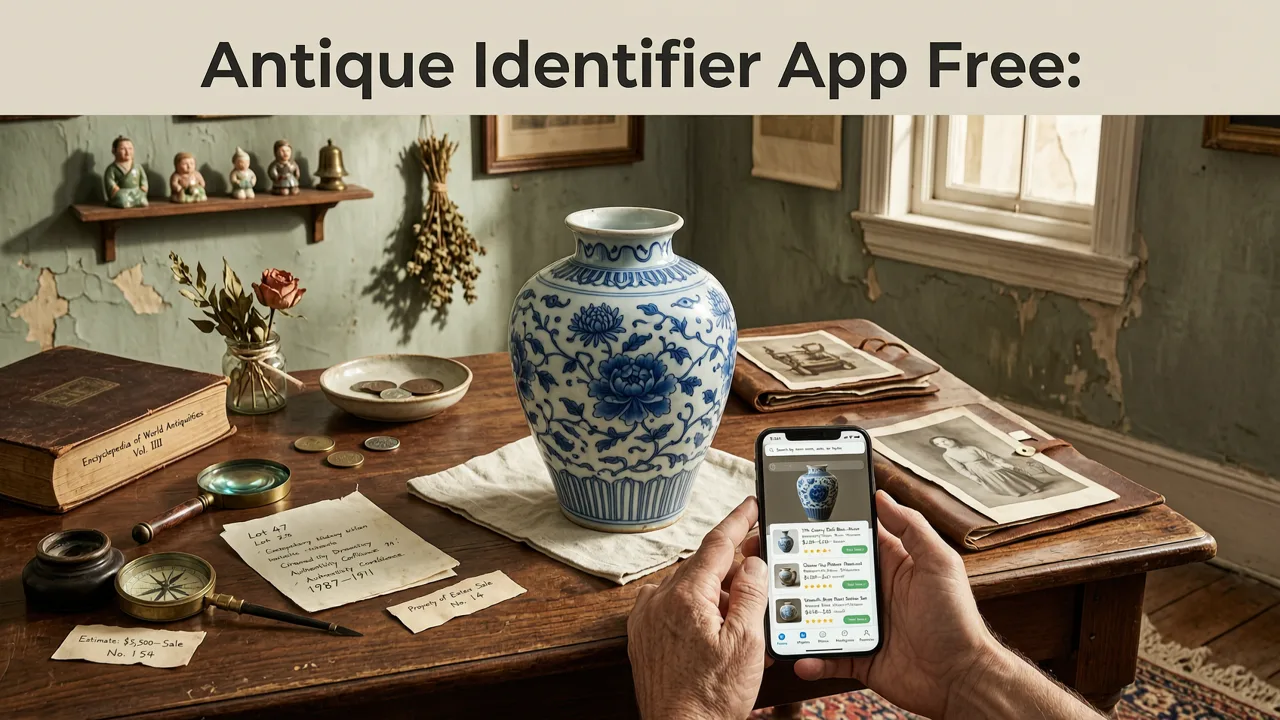
If you have ever held a mysterious piece of glassware, an unsigned painting, or a set of silver flatware and wondered what it is worth, an antique identifier app free of charge can give you a surprisingly accurate starting point. The short answer is that modern AI-powered identification tools can recognize maker marks, patterns, and era-specific design cues in seconds, offering instant recognition and preliminary value ranges without requiring a paid subscription.
In 2026, the best free antique identifier apps combine computer vision, machine learning models trained on millions of cataloged objects, and up-to-date auction data to deliver results that rival a quick consultation with a specialist. Whether you are sourcing at estate sales, clearing out an inherited collection, or simply curious about that thrift-store find, here is everything you need to know about using a free antique identifier app effectively.
Why Free Antique Identifier Apps Have Grown in Popularity
The antique and collectibles market has shifted dramatically over the past few years. Online resale platforms, estate liquidation websites, and social media marketplaces have created a surge of new collectors entering the space. Many of these newcomers lack the decades of experience that traditional dealers rely on, and they need fast, accessible tools to help them make informed decisions on the spot.
Free antique identifier apps fill that gap. They reduce the friction between discovery and knowledge. Instead of posting a photo to a forum and waiting hours for a response, or paying a specialist hundreds of dollars for a formal appraisal, you can point your phone camera at an object and receive actionable information in moments.
Several factors have driven this growth:
- Improved AI image recognition: Vision models in 2026 can distinguish between subtle pattern variations, maker mark fonts, and material characteristics that earlier systems missed.
- Larger training datasets: Apps now draw on millions of verified object records from museums, auction houses, and collector databases.
- Real-time market data: Many tools pull recent sold listings to estimate current fair market value, not just historical prices.
- Lower barriers to entry: Free tiers let casual users test the technology before committing to premium features.
How an Antique Identifier App Free Works
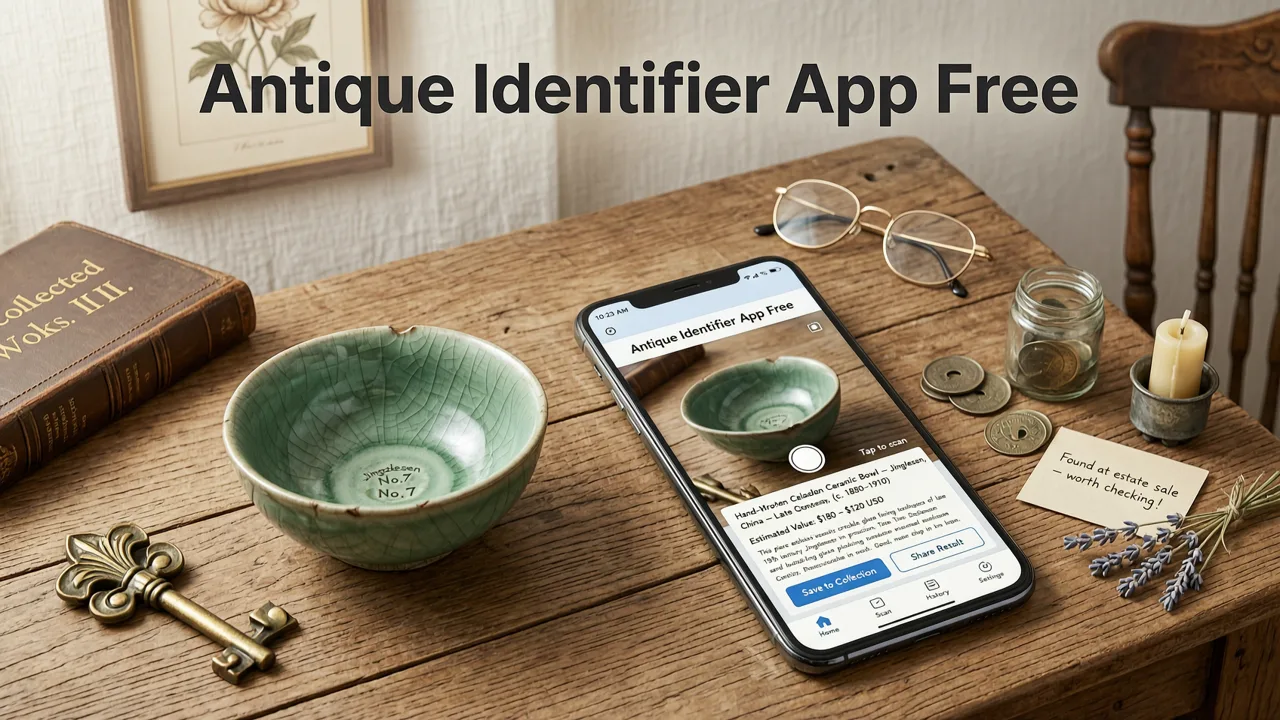
Understanding the technology behind these tools helps you use them more effectively and interpret results with appropriate confidence.
Step 1: Image Capture and Preprocessing
When you snap a photo, the app preprocesses the image to correct lighting, adjust contrast, and isolate the object from the background. High-quality photos with even lighting and minimal shadows produce the most reliable results.
Step 2: Feature Extraction
The AI analyzes visual features including shape, texture, color palette, decorative motifs, and any visible markings. It compares these features against its trained dataset using deep learning models.
Step 3: Pattern and Mark Matching
If the object bears a maker mark, backstamp, or signature, the app runs a secondary recognition pass specifically targeting those elements. This is particularly useful for ceramics, glassware, silver, and furniture where marks are a primary identification tool.
Step 4: Result Generation
The app returns a confidence-ranked list of possible matches, along with supporting details such as era, origin, manufacturer, pattern name, and estimated value range. Premium tiers often include detailed provenance reports and direct links to comparable sold listings.
For a deeper look at how experts verify what AI tools suggest, our guide on how to tell if an antique is valuable walks through seven hands-on checks that complement any app-based identification.
What to Expect from a Free Tier in 2026
Not all free antique identifier apps offer the same capabilities. Here is a practical comparison of what you can typically expect from free versus premium tiers.
| Feature | Free Tier | Premium Tier |
|---|---|---|
| Daily scans | 3 to 10 per day | Unlimited |
| Basic identification | Yes | Yes |
| Maker mark recognition | Limited | Full database access |
| Value estimates | Broad range | Detailed with sold comps |
| Provenance reports | No | Yes |
| Collection management | Basic catalog | Full inventory tools |
| Export for insurance | No | PDF and CSV reports |
The free tier is genuinely useful for quick identifications and casual collecting. If you are a reseller or estate liquidator processing dozens of items weekly, upgrading to a paid plan typically pays for itself within the first few finds.
Best Practices for Getting Accurate Results
The quality of your input directly affects the quality of the output. Follow these guidelines to maximize the accuracy of any antique identifier app free tool you choose.
Lighting Matters More Than Camera Quality
Natural, diffused daylight is ideal. Avoid harsh flash, which creates glare on glass and polished surfaces and flattates texture on textiles and wood. If you are indoors, position the object near a window and use a white surface as a backdrop.
Capture Multiple Angles
Take photos of the top, bottom, sides, and any visible marks or signatures. Maker marks on the underside of ceramics and glass are often the single most valuable piece of identification data. Our vintage glassware identification guide explains exactly where to look for pontil marks, mold seams, and etched signatures on glass pieces.
Include a Scale Reference
Place a coin, ruler, or common object next to the item. This helps the AI assess proportions and distinguish between similar patterns that come in different sizes.
Photograph Damage Honestly
Do not crop out chips, cracks, or repairs. Condition significantly affects value, and an accurate identification should account for the piece as it actually is.
Common Categories Where Free Apps Excel
Some object categories are easier for AI to identify than others. Here is where free antique identifier apps tend to perform best in 2026.
Ceramics and Porcelain
Backstamps, pattern transfers, and glaze characteristics are highly distinctive. Apps routinely identify manufacturers like Wedgwood, Royal Doulton, Meissen, and Limoges with high confidence.
Vintage and Depression Glass
Pattern recognition works well for pressed glass, where mold patterns are consistent and well-documented. Our vintage glassware identification guide covers the key patterns and eras that apps reference.
Silver and Silverplate
Hallmarks on silver are standardized in many countries, making them ideal for machine recognition. The app can often identify the maker, origin, and approximate date range from a clear hallmark photo.
Costume Jewelry
Stamped signatures and distinctive clasp mechanisms help apps narrow down manufacturers and eras quickly. If you are considering reselling jewelry, our guide to the best antiques to resell online in 2026 highlights which categories currently offer the strongest margins.
Where Free Apps Struggle and What to Do Instead
Honest assessment matters. Free antique identifier apps are powerful, but they have limitations that every collector should understand.
Fine Art and Unsigned Paintings
Paintings without signatures or with heavily worn signatures are difficult for any image-based tool. Provenance research, paint analysis, and frame examination often require human expertise. When you need a formal valuation for insurance or estate purposes, consult our antique appraisal cost guide to understand what professional appraisal services charge in 2026.
Rare or Obscure Folk Art
Objects with limited documentation in training datasets will return lower-confidence results. In these cases, treat the app output as a starting hypothesis, not a conclusion.
Reproductions and Fakes
AI can identify what an object looks like, but distinguishing an original from a high-quality reproduction sometimes requires tactile examination, weight assessment, and material testing that a photograph cannot provide.
How to Use Identification Results Wisely
Receiving an identification is only the first step. Here is how to act on the information responsibly.
- Cross-reference the result: Search the suggested maker, pattern, or era in auction databases and collector forums to confirm the app's findings.
- Check recent sold prices: Estimated values from apps are useful starting points, but actual market prices fluctuate. Look at completed listings on major resale platforms for the most current data.
- Assess condition impact: A piece identified as a valuable pattern may still carry modest value if condition issues are significant.
- Document everything: Save the app's report, your photos, and your own notes. This documentation becomes valuable if you later need insurance coverage or estate records.
- Know when to escalate: If the app suggests a high-value item, invest in a professional appraisal before selling or insuring.
Privacy and Data Considerations
When you upload photos to any app, you are sharing data. Reputable antique identifier apps in 2026 follow clear privacy policies regarding how your images are stored, used, and shared. Before using any tool, review its data handling practices. Established platforms typically use your images solely for the purpose of generating your identification report and do not share them with third parties without consent.
Getting Started with the Antique Identifier App
If you are ready to put these principles into practice, the Antique Identifier app offers a free tier that lets you test the technology on your own collection immediately. Download the app, photograph a piece you have been curious about, and see what the AI finds. You may discover that the thrift-store bowl you picked up last month is a recognized pattern with real collector demand, or you may simply satisfy a long-standing question about a family heirloom.
Either way, you walk away with knowledge, and knowledge is the foundation of smart collecting, responsible reselling, and informed estate management.
Final Thoughts
An antique identifier app free of charge is one of the most practical tools available to collectors and resellers in 2026. It does not replace expert judgment for high-value or complex items, but it dramatically accelerates the identification process for the vast majority of everyday finds. Use it as your first line of research, follow up with hands-on verification, and let the data guide your next move.
Download the Antique Identifier app today and start turning curiosity into clarity, one scan at a time.
Related resources
Frequently Asked Questions
Is there a truly free antique identifier app available in 2026?
Yes. Several antique identifier apps offer free tiers that allow a limited number of scans per day with basic identification, maker mark recognition, and broad value estimates. Premium features like unlimited scans, detailed provenance reports, and insurance-ready exports typically require a subscription.
How accurate are free antique identifier apps?
Accuracy depends on photo quality, the object category, and how well-documented the item is in the app's database. For common categories like ceramics, silver hallmarks, and pattern glass, accuracy is often high. For unsigned fine art, folk art, or rare items, treat results as a starting point and verify with additional research or a professional appraiser.
Can a free antique app tell me the exact value of my item?
Free tiers typically provide a value range based on recent comparable sales, not a guaranteed appraisal. Exact value depends on condition, provenance, current market demand, and other factors. For insurance or legal purposes, a formal appraisal from a certified professional is recommended.
What types of antiques do free identifier apps work best on?
Free apps perform best on objects with distinctive, well-documented features: ceramics and porcelain with backstamps, silver with hallmarks, pressed glass patterns, costume jewelry with maker signatures, and common furniture styles. Items with clear markings and strong database representation yield the most reliable results.
Should I trust app results over a professional appraiser?
App results are excellent for quick identification and preliminary research, but they do not replace a professional appraisal for high-value items, insurance documentation, or estate settlement. Use the app as your first step, then escalate to a certified appraiser when the stakes are significant.
Related Articles


Explore more practical antique identification and appraisal guides.
View all articles