How to Tell If an Antique Is Valuable: 7 Expert Checks for 2026
Learn how to tell if an antique is valuable with 7 expert checks covering age, rarity, condition, and provenance. Spot hidden treasures fast in 2026.

How to Tell If an Antique Is Valuable: The Short Answer
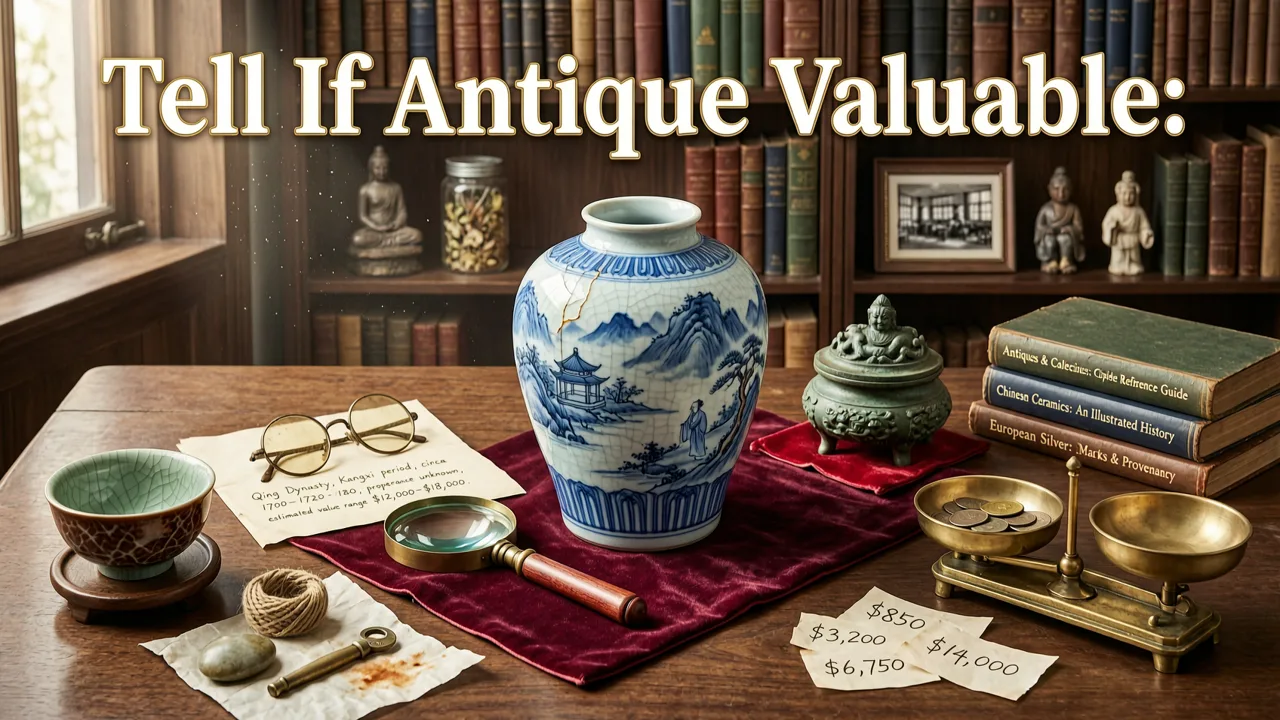
If you are wondering how to tell if an antique is valuable, start by confirming it is genuinely old (at least 100 years), checking for maker marks, assessing condition, researching recent sold prices for comparable pieces, and noting any documented history or provenance. These five signals, combined with current market demand, give you a realistic picture of value before you ever pay for a formal appraisal.
Whether you inherited a chest of drawers, found a curious brass object at a flea market, or are sorting through an estate, knowing what separates a priceless heirloom from a decorative reproduction is a skill you can build quickly. This guide walks you through the seven checks professional appraisers and experienced collectors use in 2026 to separate genuine value from wishful thinking.
1. Confirm the Age: Is It Really an Antique?
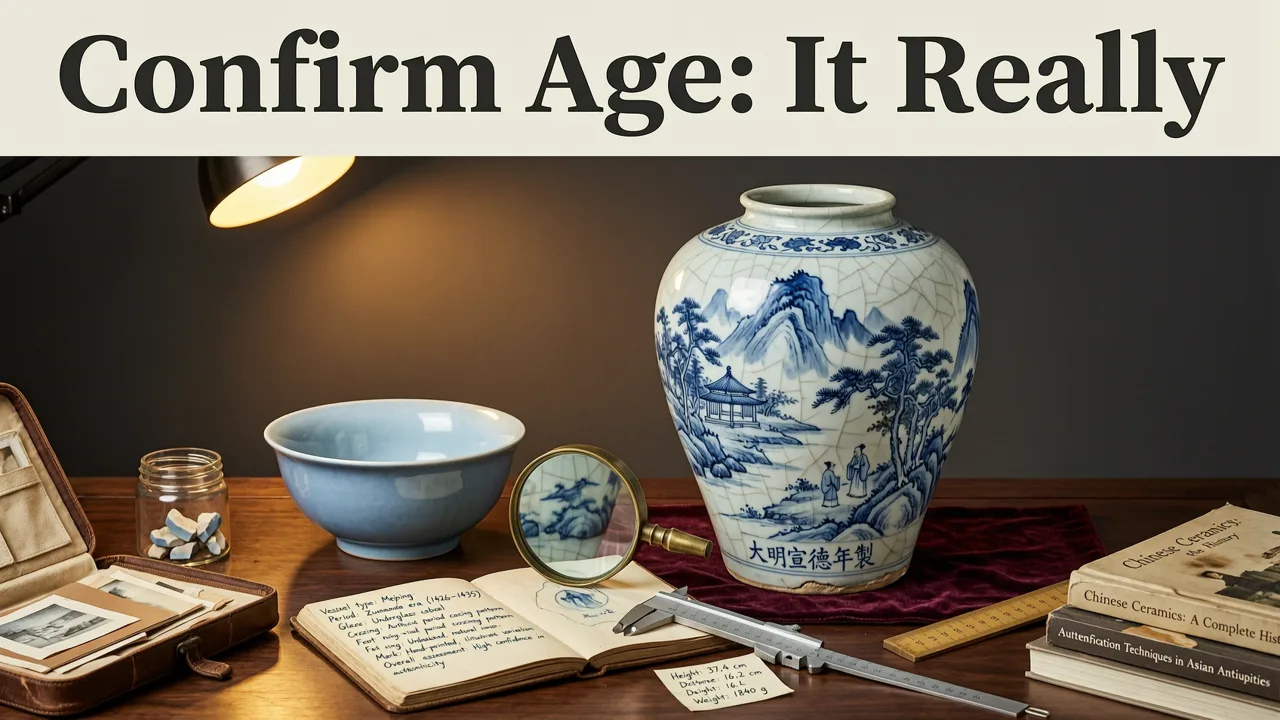
The word "antique" is often used loosely, but in the trade it has a specific meaning. Under U.S. customs law, an antique is an item made at least 100 years before the present date, which in 2026 means production no later than 1926. Items between roughly 20 and 99 years old are classified as vintage or retro, and while some vintage pieces command strong prices, the label matters for insurance, import duties, and collector expectations.
Quick Age Indicators
- Construction methods: Hand-cut dovetails, uneven saw marks, and hand-forged nails suggest pre-industrial manufacture. Machine-cut joints and uniform screws point to later production.
- Materials: Early glass has a pontil mark on the base; mid-19th-century ceramics often use transfer printing; Bakelite and early plastics emerged in the 1910s and 1920s.
- Patina and wear: Genuine age shows uneven wear in logical places, such as drawer runners, chair stretchers, and handles. Artificial aging often looks uniform or appears in illogical spots.
- Markings and stamps: Hallmarks on silver, back stamps on porcelain, and maker labels on furniture can pinpoint a date range when cross-referenced with reference databases.
2. Identify the Maker and Origin
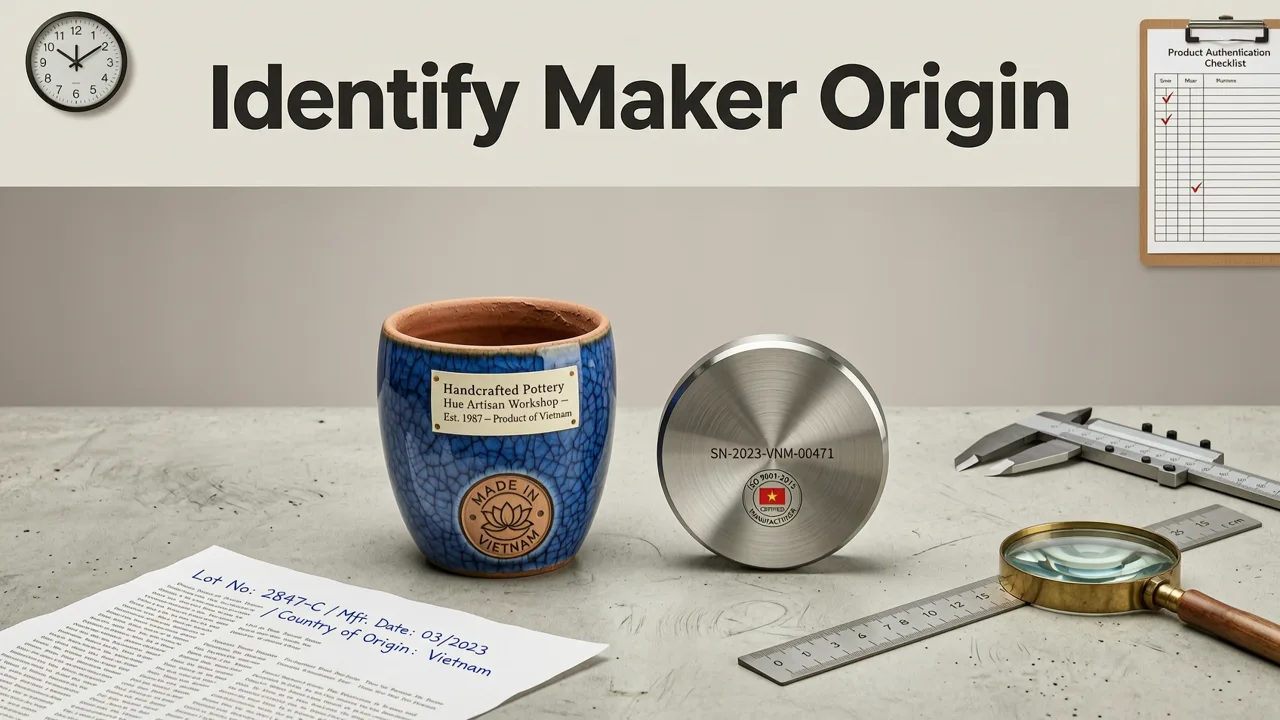
A known maker can multiply an object's value many times over. A plain oak sideboard might sell for $150, but the same design stamped by Gustav Stickley's workshops can reach five figures. The same principle applies to silver (Tiffany, Gorham, Georg Jensen), porcelain (Meissen, Sèvres, Wedgwood), and glass (Tiffany Studios, Lalique, Steuben).
Where to Look for Marks
| Category | Common Mark Locations | Key Reference Tools |
|---|---|---|
| Silver & Flatware | Underside, handle backs, clasp interiors | Online hallmark databases, silver pattern guides |
| Porcelain & Pottery | Base, foot rim, underside of lids | Kovels, Marks4Artists, manufacturer archives |
| Furniture | Back panels, drawer interiors, underside of seats | Period furniture reference books, auction archives |
| Paintings & Prints | Front lower corner, verso, stretcher bars | Artist signature databases, provenance records |
| Glass & Crystal | Base pontil area, underside of rim | Glass pattern identification guides |
If you find a mark but cannot read it, an online antique appraisal service can often decode it using AI-assisted analysis of your photographs within hours.
3. Evaluate Condition Honestly
Condition is the single biggest variable in value after authenticity. Two identical 18th-century chairs can differ in price by a factor of ten depending on whether one has original finish and tight joints while the other has been refinished, re-upholstered with modern fabric, and repaired with visible glue.
The Condition Grading Scale Collectors Use
- Mint or pristine: No visible damage, original finish intact. Highest value tier.
- Excellent: Minor wear consistent with age, no repairs or losses.
- Very good: Small, stable issues such as a hairline crack or minor chip in an inconspicuous area.
- Good: Noticeable damage that does not affect structural integrity or overall appearance from a distance.
- Fair or poor: Major cracks, missing parts, heavy restoration. Value drops sharply unless the piece is exceptionally rare.
Be cautious about "restoration." Professional conservation can stabilize and preserve value, but amateur repairs, overpainting, or replacement parts typically reduce it. When in doubt, leave damage as-is until you consult a specialist.
4. Research Rarity and Market Demand
An item can be old, authentic, and in great condition yet still worth modest sums if thousands of identical examples exist. Rarity and current collector demand determine price ceilings. For a detailed look at which categories are performing well right now, see our breakdown of antiques worth money in 2026.
How to Gauge Demand
- Completed auction results: Search sold listings on major auction platforms and live auction house archives. Filter by date range (the last 12 to 24 months) to capture current pricing.
- Dealer asking prices vs. realized prices: Asking prices on retail sites can be inflated. Realized auction prices reflect what buyers actually paid.
- Collector community activity: Active discussion forums, specialized social media groups, and club newsletters reveal which niches are heating up.
- Recent trend shifts: Mid-century modern, Art Deco, and Asian export porcelain have seen sustained interest through 2026, while some categories of Victorian brown furniture remain soft.
5. Check for Provenance and Documentation
Provenance is the documented history of ownership. A letter from the original purchaser, a photograph of the piece in a historic home, or an entry in an estate inventory can add significant value, especially for fine art, historical artifacts, and high-end furniture.
What Counts as Strong Provenance
- Original purchase receipts or bills of sale
- Exhibition labels or catalog entries
- Published references in books or scholarly journals
- Family letters, diaries, or photographs placing the object in a specific historical context
- Auction or dealer invoices tracing ownership back several decades
Provenance alone cannot make a reproduction valuable, but it can elevate an already-authentic piece into museum or premium collector territory.
6. Compare Against Recent Sales of Similar Pieces
The most reliable way to estimate value is to find what comparable items have actually sold for. This is called the comparable sales method, and it is the same approach professional appraisers use.
A Simple Comparison Framework
| Factor | Your Piece | Comparable Sold Item | Adjustment |
|---|---|---|---|
| Maker / Attribution | Unsigned | Attributed to known maker | Reduce estimate |
| Date / Period | c. 1890 | c. 1885 | Minor adjustment |
| Condition | One chip on rim | Mint | Reduce 15–30% |
| Size / Scale | 12 in. plate | 10 in. plate | Slight premium for larger |
| Provenance | None | Documented estate history | Reduce estimate |
Aim for at least three comparable sales within the last two years. If your piece differs in meaningful ways, adjust the price up or down accordingly. For a step-by-step walkthrough of what experts evaluate, review our antique appraisal checklist.
7. Get a Professional Opinion When the Stakes Are High
Sometimes the only way to know for certain is to bring in an expert. If you suspect you have something significant, a qualified appraiser can confirm authenticity, identify the maker, and provide a defensible value for insurance, estate, or sale purposes. Before you commit, review an antique appraisal cost guide so you understand typical fee structures, including flat-rate per-item fees, hourly rates, and percentage-based models.
When to Seek a Formal Appraisal
- You need a value for insurance scheduling or an estate tax filing
- The piece has strong maker marks or signatures you cannot verify yourself
- You plan to sell at auction and need a realistic reserve estimate
- The item appears to be from a high-value category such as fine art, important silver, or Asian export works
Common Mistakes That Lead to Over- or Underestimating Value
Even experienced collectors fall into a few predictable traps. Avoiding them will sharpen your instincts considerably.
- Confusing age with value: A 200-year-old utilitarian crock may be worth less than a 40-year-old designer lamp. Age alone does not set price.
- Relying on internet "valuation" tools that guarantee prices: No algorithm or app can replace informed human judgment for complex or unusual items. Use them as starting points, not final answers.
- Overvaluing sentimental attachment: Family stories are wonderful, but the market pays for what the object is, not what it means to you.
- Underestimating the cost of restoration: A "free" piece that needs $2,000 in professional work is not free.
- Ignoring the selling venue: The same chair may bring $800 at a regional auction, $1,500 through a specialty online marketplace, or $2,500 in a brick-and-mortar antique shop. Venue affects net proceeds after fees and commissions.
Quick-Reference Checklist: How to Tell If an Antique Is Valuable
Use this summary before you dig deeper into any single object.
- Is it at least 100 years old, or from a highly sought-after vintage period?
- Can you identify a maker, artist, or origin?
- Is the condition strong relative to its age and category?
- Is the form or pattern rare, or does current market demand support a premium?
- Do you have provenance or documentation that strengthens the story?
- Have you compared it to at least three recent sold prices for similar items?
- Have you consulted a professional when the potential value justifies the cost?
If you can answer yes to most of these, you are likely holding something with real market value.
Putting It All Together
Learning how to tell if an antique is valuable is less about memorizing price lists and more about building a repeatable evaluation process. Confirm age, identify the maker, assess condition honestly, research demand, check for provenance, compare recent sales, and bring in a professional when the stakes warrant it. Over time, these seven checks become second nature, and you will develop the confidence to spot genuine opportunities at estate sales, auctions, and thrift shops.
Ready to find out what your pieces are really worth? Upload clear photos to the Antique Identifier app and let our AI-powered analysis give you a fast, informed starting point before you commit to a full appraisal.
Related resources
Frequently Asked Questions
How can I tell if an antique is valuable for free?
Start by confirming the item's age, checking for maker marks or signatures, assessing condition, and comparing it to recent sold prices on auction platforms. Free online databases and the Antique Identifier app can give you a strong preliminary estimate before you pay for a formal appraisal.
Does age alone make an antique valuable?
No. Age is one factor, but rarity, condition, maker attribution, provenance, and current collector demand all play critical roles. A 200-year-old common utilitarian object may be worth far less than a rare 50-year-old designer piece.
How do I find out who made my antique?
Look for hallmarks, back stamps, labels, or signatures in typical locations such as the underside, interior drawers, or verso of a painting. Cross-reference these marks with online hallmark databases, manufacturer archives, or use an AI-powered identification service for faster results.
When should I pay for a professional antique appraisal?
Seek a professional appraisal when you need a defensible value for insurance, estate tax, or legal purposes, when maker marks are unclear, or when the piece appears to belong to a high-value category such as fine art or important silver.
What is the difference between antique and vintage?
In U.S. customs and trade usage, an antique is at least 100 years old. Vintage generally refers to items between 20 and 99 years old. Both categories can be valuable, but the distinction affects import rules, insurance classifications, and collector expectations.
Related Articles


Explore more practical antique identification and appraisal guides.
View all articles