Online Antique Appraisal Service: Fast, Accurate & AI-Powered in 2026
Discover how an online antique appraisal service works in 2026. Compare AI-powered and human appraisals, costs, accuracy, and best practices for collectors and sellers.

Online Antique Appraisal Service: What You Actually Get in 2026
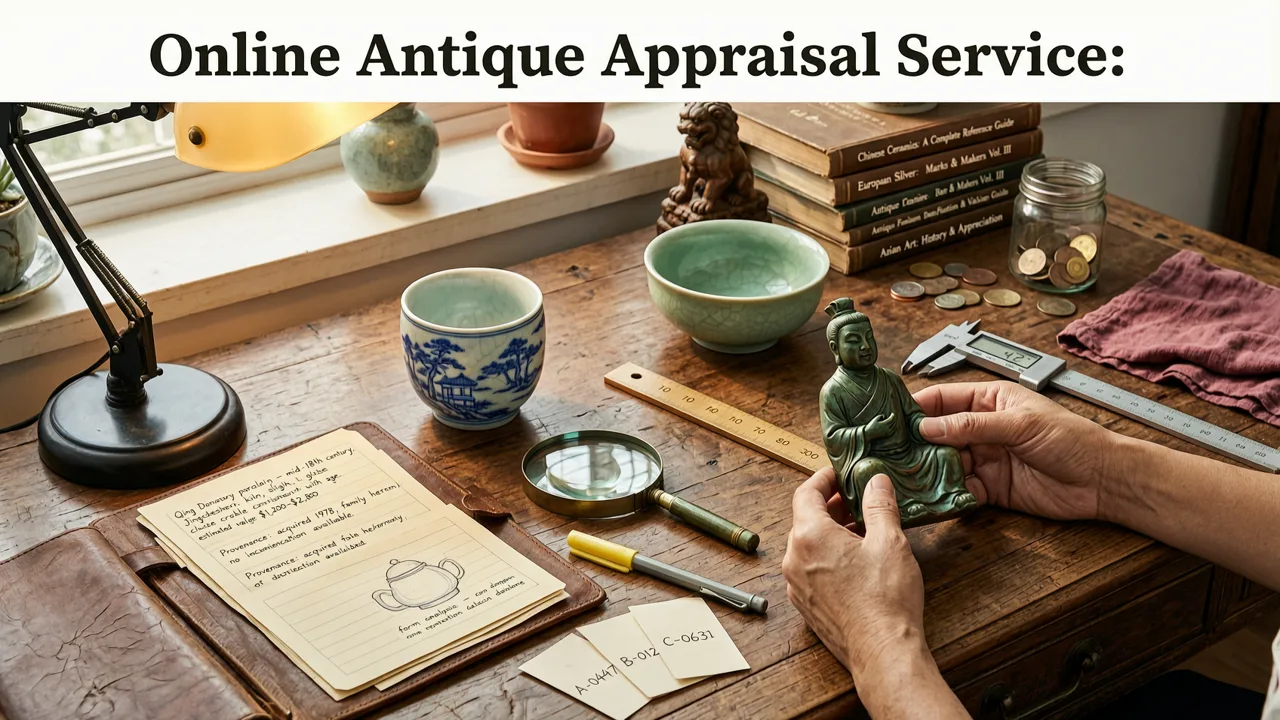
If you have a dusty porcelain figurine, a set of sterling flatware, or an unmarked oil painting sitting in your attic, an online antique appraisal service can identify it, authenticate it, and estimate its market value without you ever leaving home. In 2026, the best options combine AI-driven image recognition with vetted human specialists, delivering answers in hours instead of weeks — and often for a fraction of the cost of an in-person visit.
This guide explains exactly how modern online appraisal services work, what they cost, which items benefit most from AI versus human review, and how to avoid the common pitfalls that lead to overvalued or misidentified pieces.
How an Online Antique Appraisal Service Works in 2026
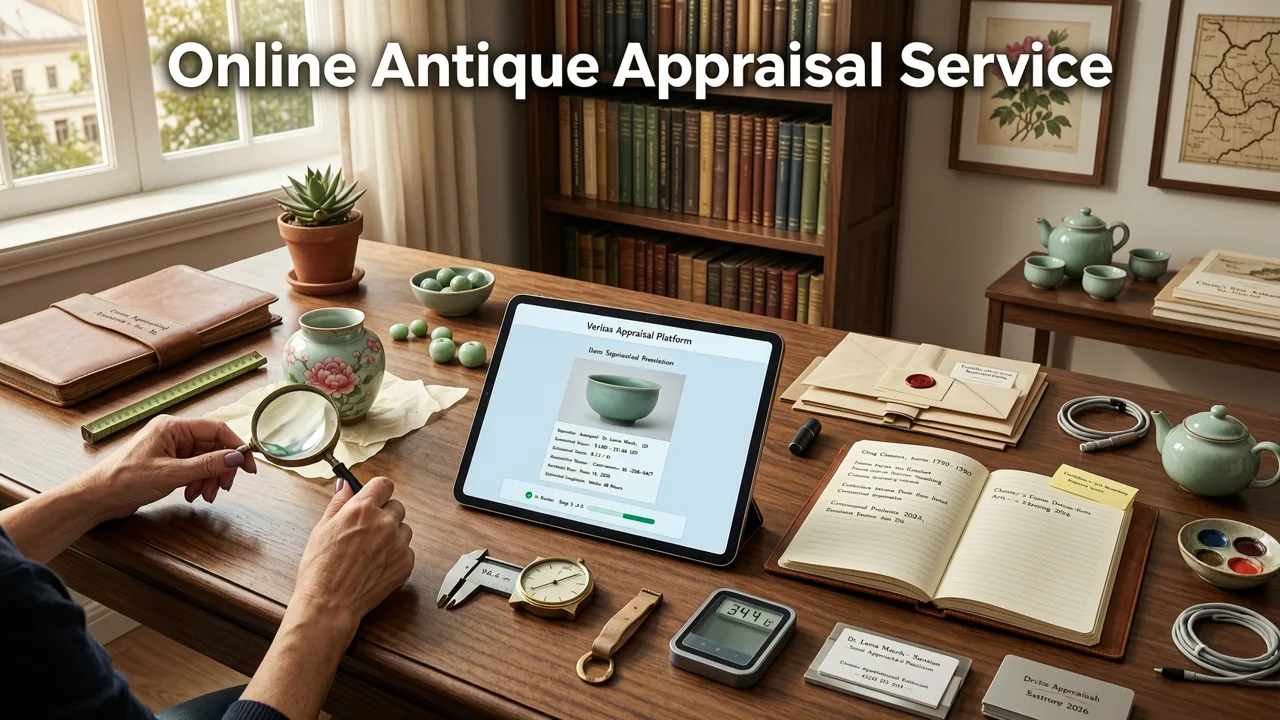
Most reputable online antique appraisal services follow a four-step workflow that mirrors the process a traditional appraiser would use, but with digital tools accelerating every stage.
Step 1: Photo Submission and Intake Form
You upload clear, well-lit photographs of the item — typically a full view, close-up of any marks or signatures, the back or underside, and any damage or repairs. You also fill out a short form covering provenance, dimensions, and how you acquired the piece.
Step 2: AI-Powered Preliminary Analysis
Advanced image-recognition models scan your photos against databases of maker's marks, pattern guides, and auction records. This initial pass can identify the maker, approximate age range, and comparable sales within minutes. For a deeper look at what specialists examine, review our antique appraisal checklist.
Step 3: Human Expert Review
A qualified appraiser — often a member of the ASA, ISA, or AAA — reviews the AI findings, corrects any misidentifications, assesses condition nuances, and assigns a final value range based on current market data.
Step 4: Delivery of the Appraisal Report
You receive a written report that includes the item's description, attribution, condition notes, value range (retail, auction, and insurance replacement), and the intended use of the appraisal. Turnaround time in 2026 ranges from 24 hours for AI-only tiers to five business days for full human-reviewed reports.
AI-Powered vs. Human Appraisals: A Side-by-Side Comparison
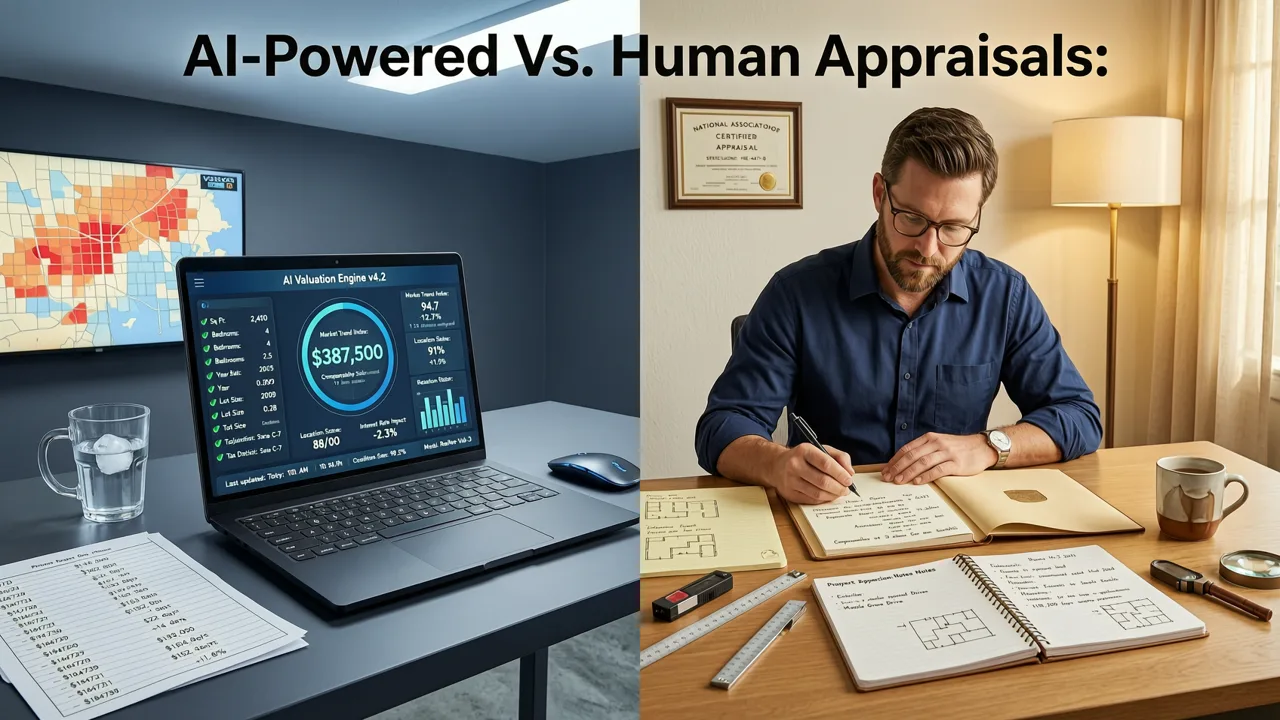
Not every online antique appraisal service uses the same model. Here is how the two main approaches compare for typical collector scenarios in 2026.
| Factor | AI-Only Appraisal | AI + Human Hybrid | Traditional In-Person |
|---|---|---|---|
| Turnaround | Minutes to 24 hours | 1–5 business days | 1–3 weeks |
| Typical cost | Free – $15 | $25 – $150 | $150 – $500+ |
| Best for | Quick ID, curiosity, thrift finds | Insurance, estate, resale pricing | High-value estates, litigation |
| Accuracy on common items | High (85–95%) | Very high (95–99%) | Very high (95–99%) |
| Accuracy on rare items | Moderate (60–75%) | High (90–97%) | High (90–97%) |
| IRS/insurance accepted | No | Often yes (check credentials) | Yes (with proper credentials) |
| Convenience | Highest | High | Lowest |
For most collectors and resellers, the hybrid model offers the best balance. If you are simply trying to identify a piece you found at a flea market, an AI-only tool is a smart first step. If you need a defensible value for insurance or estate settlement, insist on the human-reviewed tier.
When to Choose an Online Antique Appraisal Service Over Local Options
Searching for antique appraisal near me still makes sense for certain situations — particularly when you have an entire estate to evaluate or need to physically handle fragile items. But for the majority of single-item or small-collection inquiries, online services have clear advantages.
Specialization Beyond Your Local Market
Online services aggregate specialists across categories. A local generalist appraiser might not recognize a Qing dynasty export porcelain mark, but an online platform can route your submission to a ceramics specialist on staff. This matters because misattribution is the single biggest cause of inaccurate valuations.
Speed and Scheduling
In-person appraisers often book weeks out, especially during estate-sale season. Online services operate continuously, and AI-assisted tiers can deliver preliminary results the same day you submit photos.
Cost Efficiency
Traditional appraisers charge hourly rates or per-item fees that add up quickly. Online platforms typically offer flat per-item pricing, and many provide a free initial identification. If budget is a concern, our guide on how to get antiques appraised for free outlines legitimate options that won't cost you a dime for basic identification.
What a Legitimate Online Appraisal Report Should Include
Not all appraisal documents carry the same weight. A credible online antique appraisal service should produce a report that meets the Uniform Standards of Professional Appraisal Practice (USPAP) or equivalent guidelines. Here is what to look for.
- Item description: Material, dimensions, weight, color, and decorative details.
- Attribution: Maker, origin, and estimated date or period of manufacture.
- Condition report: Damage, repairs, restoration, and wear consistent with age.
- Value conclusions: Retail replacement, fair market value, and/or auction estimate — clearly labeled by intended use.
- Comparable sales data: Recent auction results or market evidence supporting the valuation.
- Appraiser credentials: Name, qualifications, and any professional affiliations.
- Effective date: The date the valuation applies to — critical for insurance and tax purposes.
- Limiting conditions: Disclaimers about what the appraisal does and does not cover.
If a service provides a one-line value with no supporting detail, treat it as an estimate, not a formal appraisal.
How Much Does an Online Antique Appraisal Cost in 2026?
Pricing varies by platform, item complexity, and the depth of analysis you need. Here is a realistic range based on current market offerings.
| Service Tier | What You Get | Price Range (2026) |
|---|---|---|
| AI identification only | Maker, age range, basic info | Free – $15 per item |
| Standard appraisal | AI + human review, written report | $25 – $75 per item |
| Premium appraisal | Full USPAP-style report, comps, insurance-ready | $75 – $200 per item |
| Estate or collection packages | Bulk pricing for 10+ items | $15 – $50 per item |
Be cautious of services that charge a percentage of the appraised value. This creates a conflict of interest and is prohibited under USPAP for appraisers who are members of recognized professional organizations.
Tips for Getting the Most Accurate Online Appraisal
The quality of your appraisal depends heavily on the quality of the information you provide. Follow these best practices to ensure the best possible result.
Take Better Photos
Use natural daylight, not flash. Photograph the front, back, bottom, and sides. Capture close-ups of any marks, signatures, labels, or hallmarks. Include a coin or ruler for scale. Avoid cluttered backgrounds.
Provide Complete Provenance
Even vague details help. "My grandmother brought it from Italy in the 1950s" or "I found it in a box labeled 'Grandpa's office'" gives the appraiser context that AI alone cannot infer.
Be Honest About Condition
Disclose chips, cracks, repairs, and restorations. An appraiser who discovers undisclosed damage after issuing a value will need to revise the report, delaying your timeline.
Choose the Right Service for Your Goal
If you need a value for insurance, estate tax, or legal proceedings, choose a service that provides USPAP-compliant reports with credentialed appraiser sign-off. For casual curiosity or resale pricing on platforms like eBay, a standard tier is usually sufficient.
Common Mistakes to Avoid When Using Online Appraisal Services
Even experienced collectors make errors that lead to inaccurate or useless appraisals. Watch out for these pitfalls.
- Submitting only one photo. A single front view is not enough. Marks and construction details are often on the back or underside.
- Confusing identification with appraisal. Knowing the maker is not the same as knowing the value. Make sure you are getting the service you actually need.
- Ignoring the effective date. Market values fluctuate. An appraisal from two years ago may not reflect today's market.
- Using the same report for every purpose. Retail replacement value and fair market value are different figures. Using the wrong one can cause insurance shortfalls or tax problems.
- Trusting services that guarantee a specific value. No legitimate appraiser guarantees a value before examining the item. Value is determined by evidence, not promises.
How AI Is Changing Antique Appraisal in 2026
Artificial intelligence has fundamentally reshaped the appraisal landscape. Modern systems use convolutional neural networks trained on millions of reference images — maker's marks, pattern databases, auction catalogs, and museum collections — to deliver identification results that were impossible just a few years ago.
AI excels at pattern recognition: matching a porcelain mark to a specific factory and date range, identifying a furniture style based on joinery and hardware details, or flagging a painting's signature against known artist databases. According to Google's AI responsibility principles, these tools are designed to assist human experts, not replace them — and the best online services reflect that philosophy.
Where AI still falls short is in assessing subtle condition issues, detecting sophisticated forgeries, and understanding the provenance stories that can dramatically affect value. That is why the hybrid model — AI for speed and pattern matching, human experts for judgment and accountability — has become the industry standard for serious collectors.
Choosing the Right Online Antique Appraisal Service for Your Needs
With dozens of platforms available, narrowing your options comes down to a few key questions.
What is your goal?
Identification only? A free AI tool will suffice. Insurance or estate documentation? You need a credentialed human appraiser in the loop. Resale pricing? A standard hybrid report is usually ideal.
What categories do you collect?
Some services specialize in specific categories — fine art, jewelry, furniture, ceramics, or coins. Others are generalists. Match the service's expertise to your collection.
Do you need a formal report?
If your appraisal must stand up to scrutiny from an insurance adjuster, the IRS, or a court, insist on a USPAP-compliant document with appraiser credentials, comparable sales data, and a signed certification.
For instant identification and AI-powered authentication across a wide range of categories, the Antique Identifier platform offers a fast, accessible starting point for collectors at every level.
Frequently Asked Questions
Is an online antique appraisal as accurate as an in-person one?
For most common and moderately rare items, yes — provided the service uses a hybrid AI-plus-human model and you submit high-quality photos. In-person appraisals still have an edge for extremely high-value items, large estates, or pieces that require physical testing (such as silver hallmarks that need acid testing).
How long does an online antique appraisal take?
AI-only identification can be completed in minutes. Hybrid services with human review typically deliver reports within one to five business days. Premium or complex appraisals may take longer depending on the need for research into comparable sales.
Can I use an online appraisal for insurance purposes?
Yes, if the service provides a USPAP-compliant report signed by a credentialed appraiser. Check that the report includes retail replacement value, an effective date, comparable sales data, and the appraiser's qualifications. Not all online services meet this standard, so verify before submitting to your insurer.
What types of antiques can be appraised online?
Virtually any category: furniture, ceramics, glass, silver, jewelry, fine art, prints, books, textiles, coins, toys, and collectibles. The key limitation is that items requiring physical or chemical testing (such as gemstone verification or wood species confirmation) may need supplemental in-person examination.
Are free online appraisals reliable?
Free AI-powered identification tools are useful for basic maker identification and age estimation, but they should not be treated as formal valuations. If you need a defensible value for insurance, tax, or legal purposes, invest in a paid appraisal with human expert review.
Get Your Antique Appraised Today
Whether you are pricing an estate, verifying a thrift-store treasure, or documenting a collection for insurance, an online antique appraisal service offers speed, expertise, and convenience that traditional methods simply cannot match in 2026. Start with a clear photo, choose a service that matches your goals, and make sure your report meets the standards you need.
Ready to find out what your piece is really worth? Use the Antique Identifier app to upload your photos and get AI-powered identification and appraisal insights in minutes.
Frequently Asked Questions
Is an online antique appraisal as accurate as an in-person one?
For most common and moderately rare items, yes — provided the service uses a hybrid AI-plus-human model and you submit high-quality photos. In-person appraisals still have an edge for extremely high-value items, large estates, or pieces that require physical testing such as silver hallmarks that need acid verification.
How long does an online antique appraisal take?
AI-only identification can be completed in minutes. Hybrid services with human review typically deliver reports within one to five business days. Premium or complex appraisals may take longer depending on the need for research into comparable sales.
Can I use an online appraisal for insurance purposes?
Yes, if the service provides a USPAP-compliant report signed by a credentialed appraiser. The report should include retail replacement value, an effective date, comparable sales data, and the appraiser's qualifications. Not all online services meet this standard, so verify before submitting to your insurer.
What types of antiques can be appraised online?
Virtually any category including furniture, ceramics, glass, silver, jewelry, fine art, prints, books, textiles, coins, toys, and collectibles. Items requiring physical or chemical testing such as gemstone verification may need supplemental in-person examination.
Are free online appraisals reliable?
Free AI-powered identification tools are useful for basic maker identification and age estimation, but they should not be treated as formal valuations. If you need a defensible value for insurance, tax, or legal purposes, invest in a paid appraisal with human expert review.
Related Articles


Explore more practical antique identification and appraisal guides.
View all articles