How to Tell If a Vintage Collectible Is Authentic: A 2026 Guide
Learn how to tell if a vintage collectible is authentic using proven methods for marks, materials, aging, and provenance. Avoid costly fakes with this 2026 guide.

How to Tell If a Vintage Collectible Is Authentic: The Short Answer

If you are holding a piece of vintage glassware, a painted tray, or an old toy and wondering whether it is the real thing, you are not alone. Authentication is the single most important skill a collector can develop, and in 2026 the stakes are higher than ever because reproduction technology has become remarkably sophisticated. The short answer is this: authenticating a vintage collectible requires examining a combination of maker's marks, material composition, construction methods, age-appropriate wear, and documented provenance. No single test is foolproof on its own, but layering several checks dramatically reduces the chance of buying a fake.
This guide walks you through a repeatable, expert-style authentication workflow that works across categories — from porcelain and glass to furniture, toys, and paper ephemera. Follow these steps and you will walk into flea markets, estate sales, and online auctions with far more confidence.
Why Authentication Matters More in 2026

The vintage and antique marketplace has changed. High-resolution 3D printing, advanced mold-making, and AI-assisted design have made reproductions harder to spot with the naked eye. At the same time, the rise of online marketplaces means buyers often cannot physically handle an item before purchasing. These two trends combine to make authentication knowledge a financial safeguard.
Collectors who skip authentication frequently pay premium prices for modern reproductions, married pieces, or outright forgeries. The good news is that most fakes still reveal themselves if you know where to look. Understanding how to tell if a vintage collectible is authentic protects your budget and preserves the integrity of your collection.
Step 1: Examine the Maker's Marks and Backstamps
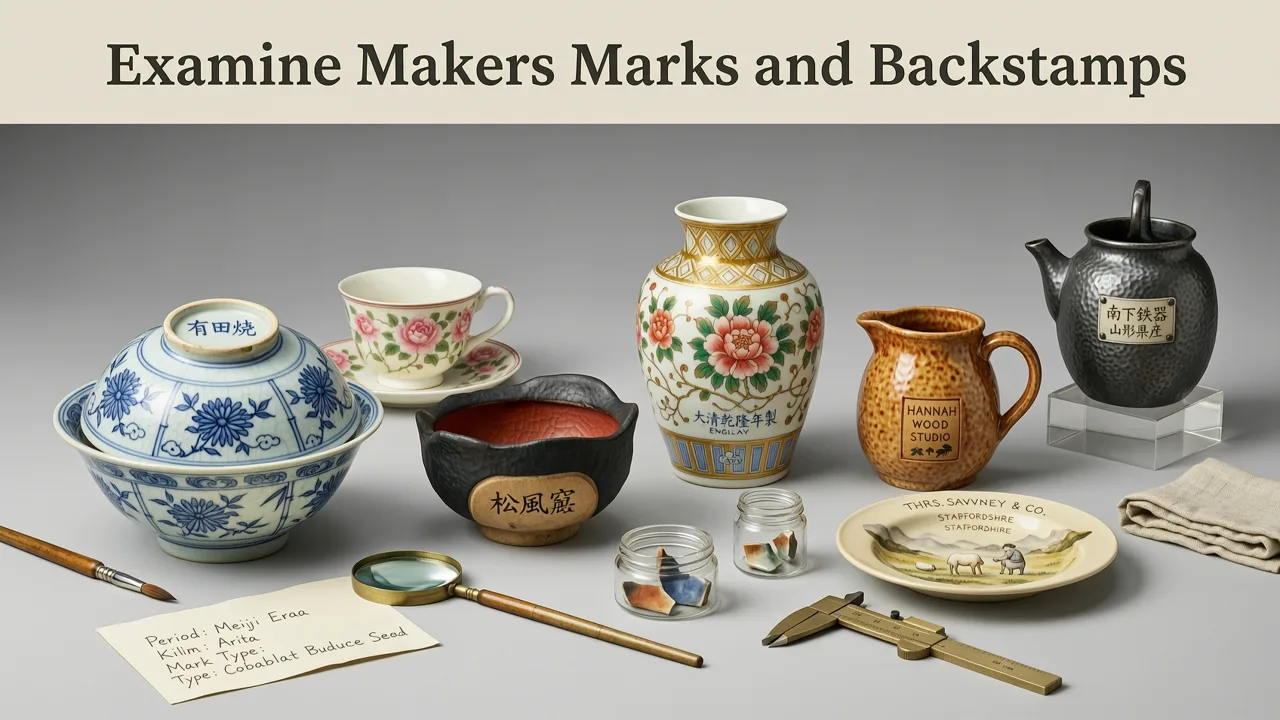
Maker's marks are the starting point for almost every authentication effort. A backstamp, impressed logo, or hand-incised signature can confirm the manufacturer, approximate date range, and sometimes even the specific factory location.
What to Look For
- Font and style consistency: Compare the mark to verified examples in reference databases. Even slight differences in letter spacing or line weight can signal a reproduction.
- Placement: Authentic marks appear in consistent locations. A backstamp on the wrong area of a porcelain base is a red flag.
- Color and application: Underglaze marks on porcelain should sit beneath the glaze surface. Overglaze marks that feel raised or look printed rather than hand-applied may indicate a later addition.
- Registry numbers: Certain categories, like British pottery, use registered design numbers that can be cross-referenced to specific years.
If you are working with glass, our Vintage Glassware Identification Guide covers etched marks, acid stamps, and foil labels across major American and European manufacturers.
Step 2: Evaluate the Materials and Construction
Materials tell a chronological story. Manufacturers used specific clays, glass formulas, metal alloys, and wood species during defined periods. When the material does not match the claimed era, the piece is likely not authentic.
Material Red Flags by Category
| Category | Authentic Indicator | Common Fake Indicator |
|---|---|---|
| Porcelain | Thin, translucent walls; fine crazing | Thick, heavy body; uniform glaze with no age |
| Pressed Glass | Seam lines from mold; slight irregularities | Perfectly smooth; no mold seams (machine-made modern) |
| Cast Iron | Sand-cast texture; rough back surfaces | Smooth, uniform casting (modern mold) |
| Wood Furniture | Hand-cut dovetails; saw marks inconsistent with modern blades | Machine-cut uniform dovetails on a claimed 18th-century piece |
| Paper Ephemera | Acid-based paper yellowing; letterpress impression | Bright white paper; offset-printed dot pattern under magnification |
The Weight and Sound Test
Experienced collectors often pick up an item and tap it gently. Authentic older porcelain produces a clear, resonant ring. Modern reproductions tend to sound duller because of differences in clay density and firing temperature. Similarly, old hand-blown glass feels lighter and has subtle asymmetry that machine-made glass lacks.
Step 3: Assess Age-Appropriate Wear and Patina
Genuine age produces wear patterns that are extremely difficult to replicate convincingly. Fakers attempt to simulate this through chemical distressing, sanding, or tumbling, but these methods almost always leave telltale signs.
Natural Wear vs. Artificial Distressing
- Wear location: Authentic wear appears on high-contact areas — foot rims, handles, gilt edges, and surfaces that would have been touched or cleaned repeatedly. Artificial distressing often spreads wear evenly or places it in illogical spots.
- Patina depth: Real patina on metal and wood penetrates the surface. Fake patina often sits on top and can be wiped away with solvent.
- Crazing patterns: On old pottery and porcelain, crazing (the network of fine cracks in the glaze) accumulates dirt over decades, giving the cracks a darkened, tea-stained appearance. Freshly induced crazing looks uniformly white or clean.
- UV exposure: Paper, textiles, and painted surfaces exposed to light over many years fade unevenly. Reproductions that claim age but show uniform color are suspect.
A reliable rule of thumb: if the wear looks too perfect or too uniform, it probably was manufactured, not earned through time.
Step 4: Research Provenance and Documentation
Provenance — the documented history of ownership — is one of the strongest authentication tools available. A piece that can be traced through estate inventories, auction records, or family photographs carries significantly more credibility than one with no history at all.
Useful Provenance Sources
- Estate sale documentation: Original purchase receipts, insurance appraisals, or handwritten inventories.
- Historical photographs: Period images showing the item in a home setting can confirm it existed decades ago.
- Auction archives: Records from major houses can verify that identical or similar pieces were sold in past decades.
- Collector society records: Specialty clubs for categories like Red Wing pottery, McCoy, or Fiesta often maintain reference archives.
Provenance alone does not guarantee authenticity — documents can be forged — but it adds a layer of confidence that pure visual inspection cannot provide.
Step 5: Use Technology and AI-Assisted Tools
In 2026, collectors have access to powerful digital tools that did not exist even a few years ago. High-resolution macro photography, UV light examination, and AI-driven visual analysis can reveal details invisible to the naked eye.
Practical Tech Checks
- UV/blacklight test: Many modern repairs and reproductions fluoresce differently under ultraviolet light. Fresh porcelain glaze, modern paint, and synthetic adhesives often glow bright white or blue, while original surfaces appear muted.
- Magnification: A 10x jeweler's loupe or a smartphone macro lens can reveal mold seams, printing dot patterns, and brushstroke inconsistencies.
- AI identification apps: Tools like the Antique Identifiers app use machine learning to compare your piece against thousands of verified examples, flagging potential matches and inconsistencies in marks, shapes, and patterns.
For collectors who want to understand how AI identification works at a technical level, the OpenAI documentation provides useful background on how visual models are trained and validated.
Step 6: Compare Against Known Authentic Examples
Side-by-side comparison is one of the most effective authentication methods. If you can place your piece next to a confirmed example — at a museum, a dealer's showroom, or through high-resolution online databases — differences in proportion, color, detail sharpness, and mark placement become immediately apparent.
Where to Find Reliable Comparisons
- Museum collections with searchable online databases
- Published price guides and scholarly reference books
- Specialty collector forums with moderated image galleries
- Verified dealer websites with detailed photography
Be cautious of comparison images from unverified marketplace listings. A fake compared to another fake will not help you.
Common Authentication Mistakes to Avoid
Even seasoned collectors occasionally make errors. Being aware of these pitfalls can save you significant money.
The "Old Doesn't Mean Authentic" Trap
A piece can genuinely be old without being what it claims to be. A 1920s reproduction of an 18th-century design is still a 1920s piece, not an 18th-century one. Always authenticate the specific claim being made, not just the general age.
Relying on a Single Indicator
A correct maker's mark does not guarantee authenticity — marks have been copied and transferred onto reproductions. Similarly, the presence of wear does not prove age — distressing techniques are widely practiced. Always combine multiple indicators.
Letting Emotional Excitement Override Caution
The thrill of a potential find can short-circuit careful evaluation. If a deal seems extraordinary, slow down. Walk away, revisit your notes, and consult reference materials before committing.
When to Seek Professional Authentication
Some pieces warrant expert evaluation. If you are considering a significant purchase, preparing an insurance appraisal, or planning to sell through a major auction house, professional authentication is a wise investment. You can review current appraisal pricing in our Antique Appraisal Cost Guide to understand what to budget.
Situations That Call for an Expert
- High-value purchases above your personal risk threshold
- Pieces with conflicting indicators — correct marks but questionable construction, for example
- Items intended for insurance documentation or estate planning
- Category specialties where authentication requires deep expertise, such as Native American jewelry, first-edition books, or signature sports memorabilia
If you are evaluating an entire estate and need to determine which pieces are worth pursuing, our Is My Antique Worth Selling? guide offers a practical framework for prioritizing your efforts.
Building a Long-Term Authentication Skill Set
Authentication is not a skill you learn in a single afternoon. It develops through repeated exposure, careful study, and honest reflection on mistakes. Here are practical habits that accelerate your growth:
- Handle authentic pieces regularly. Visit museums, dealer shows, and antique shops. Train your hands and eyes through direct contact with verified items.
- Study one category deeply before expanding. Depth of knowledge in a single niche — say, American Brilliant Period cut glass — transfers more skill than surface-level familiarity with dozens of categories.
- Document your own purchases. Photograph marks, construction details, and wear patterns. Over time, your personal reference library becomes invaluable.
- Read scholarly sources, not just price guides. Understanding the historical manufacturing context tells you why authentic pieces look and feel the way they do.
- Stay current on reproduction techniques. Fakers evolve. Follow collector forums, trade publications, and authentication research to keep your knowledge updated.
Quick Authentication Checklist
Use this summary whenever you evaluate a new piece. Run through each point before making a purchase decision.
| Check | What to Verify | Status |
|---|---|---|
| Maker's Mark | Style, placement, and color match verified examples | ☐ |
| Materials | Clay, glass, metal, or wood consistent with claimed era | ☐ |
| Construction | Joinery, mold seams, and forming methods are period-appropriate | ☐ |
| Wear Patterns | Wear appears in logical, high-contact locations | ☐ |
| Patina | Surface age is consistent and cannot be wiped away | ☐ |
| Provenance | Documentation or historical context supports authenticity | ☐ |
| UV Test | No unexpected fluorescence from repairs or modern materials | ☐ |
| Comparison | Side-by-side with confirmed example shows no significant discrepancies | ☐ |
Final Thoughts on Authenticating Vintage Collectibles
Learning how to tell if a vintage collectible is authentic is a journey, not a destination. Every piece you examine — whether it turns out to be genuine or not — teaches you something new about materials, manufacturing history, and the creative lengths people go to in order to replicate the past. The collectors who thrive long-term are the ones who treat each purchase as a learning opportunity and who invest in knowledge before they invest in inventory.
If you want to put these methods into practice right now, the fastest way to start is by photographing your piece and running it through the Antique Identifiers app. Our AI-powered tool compares your item against a growing database of verified marks, patterns, and forms, giving you an instant starting point for deeper research. Whether you are browsing a weekend estate sale or evaluating an inherited collection, authentication begins with a single informed question — and you now have the framework to ask it with confidence.
Frequently Asked Questions
What is the fastest way to check if a vintage collectible is real?
The fastest initial check is to examine the maker's mark under magnification and compare it to verified reference images. Then use a UV blacklight to detect modern repairs or synthetic materials. For a broader assessment, AI identification tools can cross-reference your piece against thousands of authenticated examples in seconds.
Can old items still be fake or reproduction?
Yes. An item can be genuinely old without being what it claims to be. A 1930s reproduction of an 18th-century design is a 1930s piece, not an 18th-century antique. Always authenticate the specific claim being made, not just the general age of the object.
How reliable are maker's marks for authentication?
Maker's marks are a strong starting point but should never be the sole authentication factor. Marks have been copied, transferred, and forged throughout collecting history. Combine mark verification with material analysis, construction examination, and wear pattern assessment for a reliable conclusion.
What does a UV light reveal about antique authenticity?
A UV or blacklight reveals modern repairs, replacement parts, and synthetic materials that fluoresce differently from original aged surfaces. Fresh porcelain glaze, modern paint, and synthetic adhesives typically glow bright white or blue under UV light, while original antique surfaces appear muted.
When should I hire a professional appraiser for authentication?
Hire a professional when the purchase exceeds your personal risk tolerance, when indicators conflict (correct marks but questionable construction), when you need documentation for insurance or estate purposes, or when the category requires specialized expertise such as fine art, rare books, or signature memorabilia.
Related Articles


Explore more practical antique identification and appraisal guides.
View all articles