Vintage Glassware Value Checker: Free AI Identification Guide 2026
Use our vintage glassware value checker to identify patterns, makers, and estimated worth. Learn how AI tools appraise Depression, carnival, and art glass in 2026.

Vintage Glassware Value Checker: The Short Answer

If you are holding a cut-glass pitcher, a pink Depression-era goblet, or a frosted carnival bowl and wondering what it might be worth, a vintage glassware value checker is the fastest way to get a realistic estimate without paying for a formal appraisal. In 2026, AI-powered identification tools can analyze photos of your glassware and return a maker, pattern name, approximate production era, and a market-value range in seconds. The best part: many of these tools, including the Antique Identifier app, offer free scans for casual collectors and thrift shoppers.
This guide explains how modern value checkers work, which types of vintage glass command the highest prices, and how to prepare your pieces for the most accurate identification. Whether you inherited a cabinet of cut crystal or found a cobalt-blue bottle at a flea market, you will leave with a clear process for turning curiosity into a confident number.
Why the Vintage Glassware Market Has Shifted in 2026
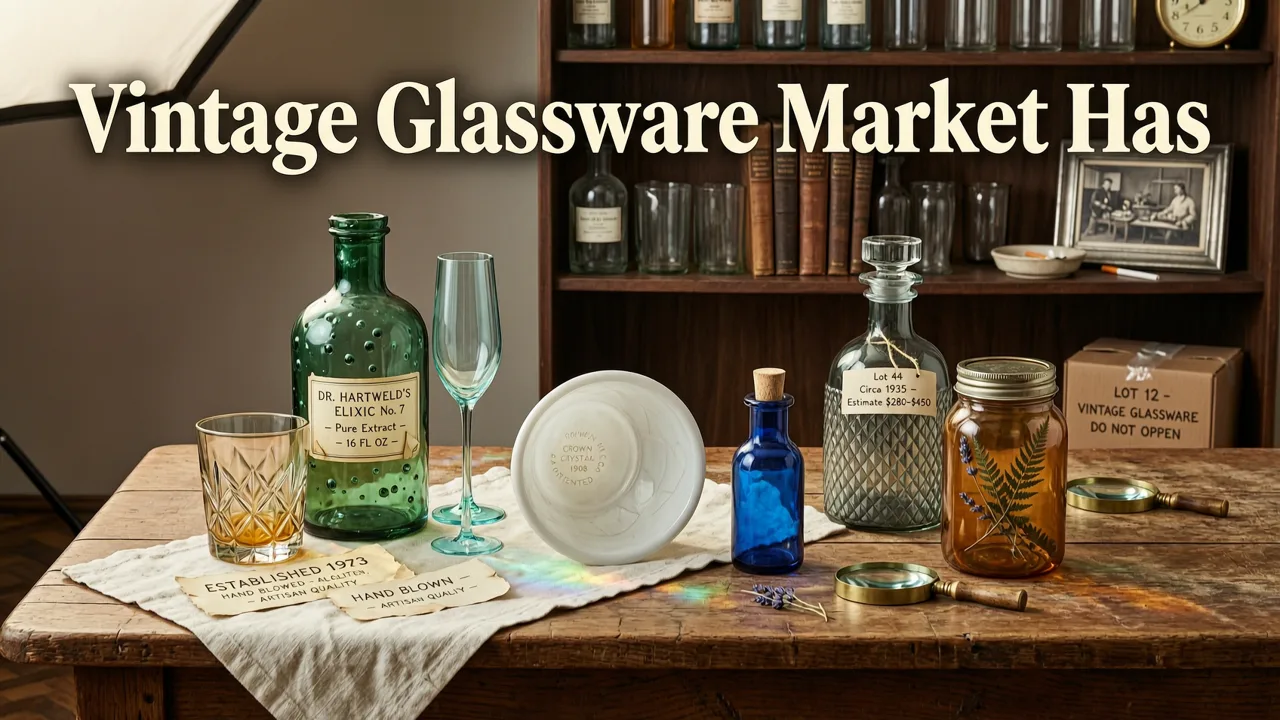
Three forces have reshaped how collectors research glassware value this year:
- AI vision models now recognize subtle mold lines, pontil marks, and color gradients that human appraisers used to compare manually against printed reference books.
- Online auction data from platforms like eBay, Etsy, and LiveAuctioneers is updated in real time, giving value checkers access to sold-price comps rather than outdated book values.
- Collector demographics have tilted younger. Millennial and Gen Z buyers are driving fresh demand for Mid-Century Modern glass, 1970s art glass, and colorful Depression patterns, which shifts which pieces carry a premium.
Together, these shifts mean a free AI scan can now be more current than a printed price guide that may be five or ten years old. For a deeper look at how identification technology has evolved, see our guide to the best antique identification apps tested in 2026.
How a Vintage Glassware Value Checker Works

Modern value checkers follow a four-step pipeline behind the scenes. Understanding this process helps you take better photos and interpret the results you receive.
1. Image Capture and Pre-Processing
You upload one or more photos. The system normalizes lighting, removes background clutter, and isolates the glass object using edge-detection algorithms. Clear, well-lit images on a neutral background produce the most reliable results.
2. Feature Extraction
The AI examines shape profile, rim style, base type (pontil, ground, or molded), color saturation, surface texture (optical ripple, hobnail, cut patterns), and any visible maker marks or stickers. For pressed glass, it maps mold-seam placement and motif details.
3. Database Matching
Extracted features are compared against a catalog of known patterns, maker archives, and historical production records. The engine returns a ranked list of probable matches with confidence scores.
4. Valuation Overlay
Once a likely match is identified, the tool pulls recent sold listings and auction results to generate a value range. Condition adjustments, rarity flags, and current collector-trend data refine the estimate. For more context on how professional appraisers build similar valuations, check our antique appraisal cost guide for 2026.
Types of Vintage Glassware That Hold the Most Value
Not every old piece of glass is valuable, but certain categories consistently perform well at auction and in private sales. Here is a breakdown of the most sought-after types in 2026.
| Glass Category | Typical Era | Key Identifiers | Value Range (USD) |
|---|---|---|---|
| Depression Glass | 1929–1939 | Pressed patterns, pink, green, cobalt, uranium | $5–$1,200 per piece |
| Carnival Glass | 1908–1930s | Iridescent surface, pressed base patterns | $15–$2,500 per piece |
| Cut Crystal (Brilliant Period) | 1880–1915 | Deep cuts, heavy weight, clear ring | $100–$5,000+ per piece |
| Mid-Century Art Glass | 1940s–1960s | Hand-blown, bold colors, pontil marks | $30–$3,000 per piece |
| Depression-Era Advertising Glass | 1920s–1940s | Embossed logos (Coca-Cola, Pepsi, Texaco) | $20–$800 per piece |
| Warwick and English Cameo | 1920s–1930s | Relief floral scenes, cased glass | $40–$1,500 per piece |
| Tiffany-Style Slag Glass | 1890s–1920s | Marbled opaque panels, copper foil | $200–$8,000+ for lamps |
Keep in mind that rarity, condition, and current buyer demand drive the wide ranges above. A common pink Depression sherbet plate may sell for ten dollars, while a rare cobalt "Sharon" pitcher can exceed a thousand. A quick scan with a vintage glassware value checker helps you tell the difference before you list or insure a piece.
Step-by-Step: How to Check Your Vintage Glassware Value
Follow these steps to get the most accurate identification and valuation from an AI tool.
Step 1 — Clean and Photograph
Wipe the piece with a soft, lint-free cloth. Avoid submerging iridescent carnival glass or painted pieces. Photograph against a plain white or gray background in natural daylight. Capture the top, base, side profile, and any maker marks or stickers.
Step 2 — Upload to the Identifier
Open the Antique Identifier app and select the glassware category. Upload your best images. If the first scan returns a low confidence score, add a close-up of the base or rim and rescan.
Step 3 — Review the Match Details
The tool will display the likely maker, pattern name, production era, and a value range based on recent comps. Pay attention to the confidence score and read any notes about similar patterns that could be confused with your piece.
Step 4 — Cross-Check Sold Comps
Search the identified pattern on eBay's "Sold Listings" filter and on LiveAuctioneers to confirm the AI's range. If the numbers align, you have a reliable market value. For a broader view of what is trending this year, see our antiques worth money in 2026 roundup.
Step 5 — Decide: Sell, Insure, or Keep
If the value surprises you, consider getting a formal written appraisal for insurance purposes. If the value is modest, you may still enjoy the piece for its history and display appeal.
Common Mistakes That Skew Glassware Valuations
Even experienced collectors occasionally misjudge a piece. Watch out for these pitfalls when using any value checker.
Confusing Reproductions with Originals
Popular Depression patterns like "Royal Lace" and "Sharon" have been reissued since the 1970s. Reproductions often feel lighter, have sharper mold seams, and lack the subtle color variation of originals. A good AI checker flags likely reproductions, but always verify by comparing weight and color depth.
Overlooking Hairline Cracks
A hairline crack can reduce a piece's value by 50 percent or more. Run a fingernail gently along the rim and base under bright light. If the nail catches, note the flaw when requesting a valuation.
Ignoring the Base
The base tells you whether the piece was hand-blown (rough or snapped pontil), mold-blown (seam lines), or machine-made (smooth, uniform). This single detail can separate a $20 find from a $2,000 treasure. Learn more expert checks in our how to tell if an antique is valuable guide.
Assuming Age Equals Value
Mass-produced glass from the 1940s and 1950s can be nearly a century old yet carry little collector premium. Value depends on pattern rarity, maker reputation, and current demand, not just age.
What to Look for in a Reliable Value Checker
Not every identification tool delivers trustworthy results. Here are the features that separate a serious vintage glassware value checker from a novelty app.
- Specialized glass database: The tool should reference known pattern catalogs, maker archives, and auction records specific to glassware, not a generic image search.
- Recent sold-price data: Value ranges must be tied to actual transactions from the past 12 months, not list prices or outdated guidebooks.
- Confidence scoring: A transparent match score helps you gauge whether the identification is definitive or merely a best guess.
- Reproduction alerts: The best tools flag known reproduction patterns so you avoid overvaluing a modern reissue.
- Condition adjustment: The ability to note chips, cracks, or wear and see how those flaws affect the estimate.
Quick Reference: Popular Depression Glass Patterns and 2026 Values
Below is a snapshot of some of the most collected Depression glass patterns and their approximate values in 2026 for a single piece in excellent condition.
| Pattern | Maker | Years Produced | Typical Piece Value |
|---|---|---|---|
| Royal Lace (cobalt) | Hazel-Atlas | 1931–1941 | $80–$600 |
| Sharon | Hocking Glass | 1932–1935 | $30–$1,200 |
| Mayfair | Hocking Glass | 1931–1935 | $8–$150 |
| Ballerina | Hocking Glass | 1930–1934 | $15–$300 |
| Chicken Feed | MacBeth-Evans | 1920s | $20–$400 |
| Windmill (pink) | Jeannette Glass | 1930s | $15–$250 |
Complete sets and rare colorways push values significantly higher. A full cobalt Royal Lace service can reach five figures at auction.
Caring for Vintage Glassware to Preserve Value
Proper care protects both the beauty and the market value of your collection.
- Hand wash only. Dishwashers can dull iridescent surfaces, loosen glued-on knobs, and cause thermal shock in older crystal.
- Use mild detergent. Avoid abrasive scrubbers. A soft sponge and lukewarm water are sufficient for most pieces.
- Store with padding. Place acid-free tissue paper between stacked plates and goblets to prevent scratching.
- Avoid direct sunlight. Prolonged UV exposure can fade certain colors, especially uranium glass and some painted pieces.
- Display safely. Use plate stands with felt pads and keep heavy pieces on sturdy shelves away from high-traffic areas.
When to Call a Professional Appraiser
AI value checkers are excellent for quick estimates, but certain situations call for a certified human appraisal:
- Insurance documentation: Most insurers require a written, signed appraisal from a qualified expert.
- Estate settlement: Probate courts often need formal appraisals for tax purposes.
- High-value pieces: If the AI estimate exceeds $2,000 and you plan to sell, a second opinion reduces the risk of underpricing.
- Disputed authenticity: When a piece could be a valuable original or a well-known reproduction, an expert's physical examination is essential.
Final Thoughts
A vintage glassware value checker puts decades of collecting knowledge at your fingertips. Whether you are sorting through an estate, browsing a thrift store, or curating a long-held collection, AI-powered identification saves you time, reveals hidden treasures, and helps you avoid costly mistakes. The technology is not a replacement for expert judgment on high-value pieces, but for everyday research it is faster and often more current than any printed guide.
Ready to find out what your glassware is really worth? Open the Antique Identifier app, snap a photo, and get an instant AI-powered identification and value estimate today.
Related resources
Frequently Asked Questions
Is there a free vintage glassware value checker I can use on my phone?
Yes. The Antique Identifier app offers free AI-powered scans that identify the maker, pattern, era, and estimated value of vintage glassware using just a photo taken on your smartphone.
How accurate are AI glassware value checkers compared to printed price guides?
AI tools are generally more current because they pull from recent sold listings and auction data rather than relying on printed books that may be years out of date. Accuracy depends on photo quality and the specificity of the tool's glassware database.
What is the most valuable type of vintage glassware?
Brilliant Period cut crystal, rare Depression glass in cobalt or uranium colors, and signed Mid-Century art glass by makers like Tiffany, Loetz, and Murano artisans consistently command the highest prices at auction.
How can I tell if my Depression glass is a reproduction?
Reproductions often feel lighter, have sharper and more uniform mold seams, and lack the subtle color variation and surface wear of originals. Comparing weight, checking the base texture, and using an AI identifier that flags known reissues are reliable methods.
Do I need a professional appraisal if the AI checker gives me a value?
For insurance, estate settlement, or pieces estimated above $2,000, a certified written appraisal is recommended. For casual selling, collecting, or curiosity, an AI value check is usually sufficient.
Related Articles


Explore more practical antique identification and appraisal guides.
View all articles