Antiques Roadshow Most Valuable Finds: What Sets Them Apart
See the antiques roadshow most valuable finds, why appraisers valued them so highly, and the provenance, rarity and condition clues to check at home.
On this page

A pocket watch forgotten in a drawer. A blanket folded on a shelf since the 1890s. A card table that hosted fifty years of family poker. The antiques roadshow most valuable finds almost never look expensive — which is precisely why their owners lined up for a free opinion.
The short answer: the show's record appraisals cluster in a handful of categories — Chinese works of art, rare Navajo textiles, important Swiss watches, documented early American furniture and Fabergé — and they reach six or seven figures because of verifiable rarity, maker attribution and provenance, not age alone. Below are the famous finds, the value drivers behind them, and a practical process for checking your own pieces in 2026.
The Antiques Roadshow Most Valuable Finds at a Glance
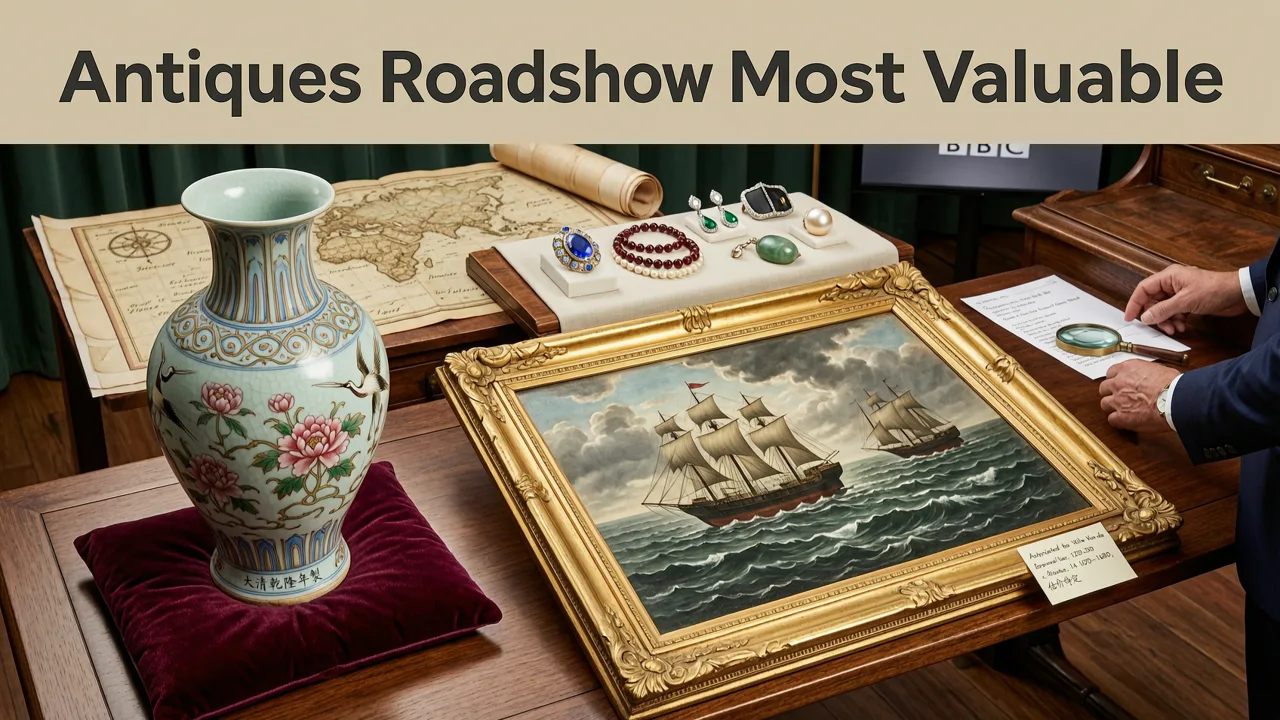
Lists of the biggest appraisals keep shifting, because the program revisits earlier pieces and re-appraises them as markets move. These are several of the most widely reported high-value finds from the US and UK versions, with the reason each number was possible.
| Find | Category | Reported appraisal | What made it possible |
|---|---|---|---|
| Group of Chinese rhinoceros horn cups | Asian works of art | Reported in the $1 million–$1.5 million range | Exceptional carving, age, and a complete group rather than a single cup |
| Navajo (Diné) first-phase chief's wearing blanket | Textiles | Around $1.5 million on a later reappraisal | Very few surviving examples, early materials and dyes, family ownership history |
| Patek Philippe pocket watch, 1914 | Watches | Around $1.5 million on a later reappraisal | Blue-chip maker, small production, original condition, single-family provenance |
| Seymour card table, Boston (Federal period) | American furniture | Around $500,000 | Attributed to the John and Thomas Seymour shop; distinctive inlay, construction and published comparisons |
| Fabergé flower (UK series) | Jewelry and objets de vertu | Around £1 million | Imperial-house association, workmaster attribution, tiny surviving output |
Read those figures correctly. They are appraisers' opinions given on camera, usually as auction estimates, on a particular date. They are not offers, not guarantees and not sale results. Some of those categories have climbed since; others have cooled. Use the table as a map of what kinds of objects can be extraordinary — never as a price list for your own version of the same thing.
What Actually Drives a Record Antiques Roadshow Appraisal
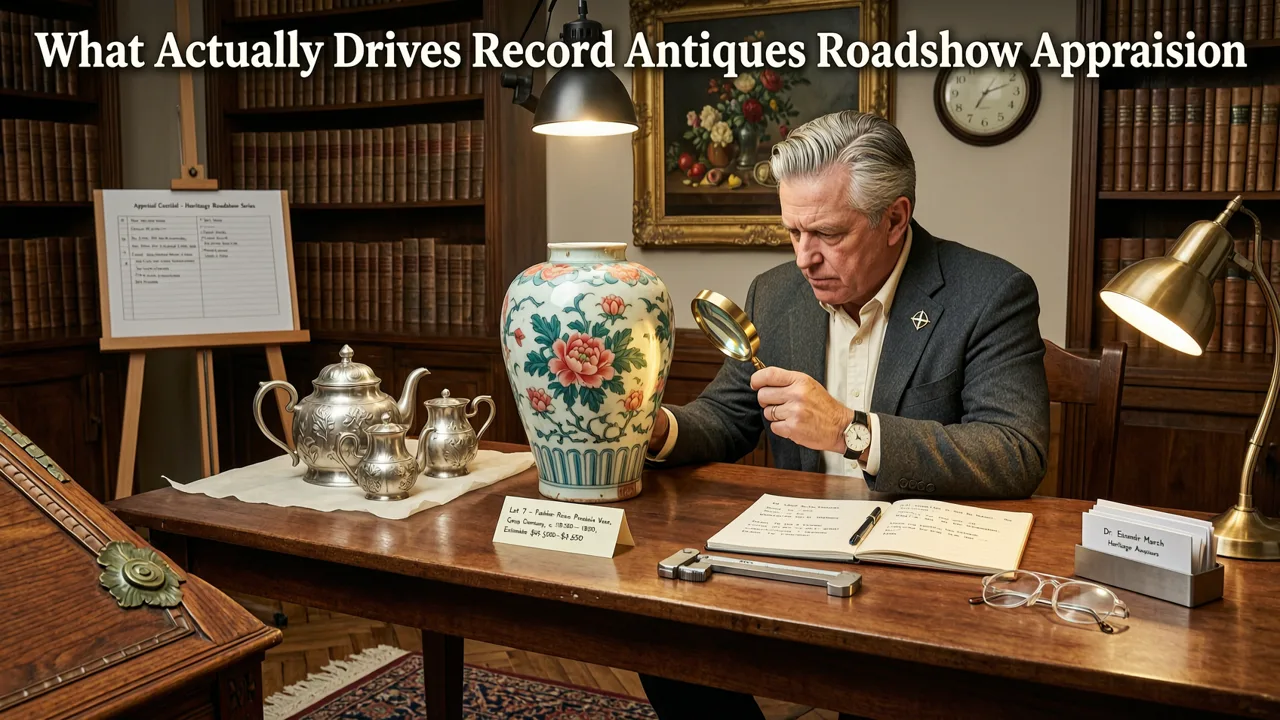
Age is the least interesting variable in that table. Plenty of 200-year-old objects sell for under $100. What separates a $2,000 piece from a $200,000 piece is a stack of factors that reinforce one another.
Rarity you can almost count
Record-level pieces come from populations small enough that specialists can name most surviving examples. First-phase Navajo chief's blankets, imperial-quality carvings and workmaster-signed Fabergé all sit in that territory. “Old and uncommon” is not the same as “one of a handful left.”
Provenance that survives on paper
Provenance is the documented chain of ownership and history behind an object: dated receipts, letters, photographs of the piece in a family home, exhibition or publication records, old collection labels. A good story adds color. A paper trail adds money, because it removes doubt about authenticity and title.
Originality and honest condition
Appraisers reward untouched surfaces: original finish on furniture, an unpolished dial on a watch, unrepaired weaving, intact glaze. Skilled conservation is acceptable when disclosed. Invisible restoration, replaced parts and aggressive refinishing are not — they turn a rare original into a hybrid, and hybrids sit in a lower price tier.
Attribution: the words that move the number
Catalog language is a confidence scale, and every rung changes the estimate. This is where most optimistic home valuations fall apart.
| Catalog wording | What it claims | Effect on value |
|---|---|---|
| Signed or marked by the maker | Physical evidence on the piece itself | Strongest, if the mark is genuine and period-correct |
| Documented | An archive, invoice or publication ties it to the maker | Comparable to signed |
| Attributed to | Expert judgment based on style and construction | Meaningful discount versus documented |
| School of, circle of, in the manner of | Related period and style, not the hand itself | Large discount |
| In the style of, reproduction | A later copy or homage | Decorative value only |
Demand at the moment of appraisal
Reappraisals cut both ways. Categories that were hot when a piece first appeared can be flat years later, and neglected categories can wake up. Collector taste, museum interest and the supply of fresh examples all move the number. That is why a serious valuation is always dated.
Appraisal Value Versus What You Can Actually Realize
Three numbers, three purposes
- Auction estimate: the range a specialist auction house expects competitive bidding to reach. This is the figure most televised appraisals resemble.
- Insurance replacement value: what it would cost to buy a comparable piece at retail from a dealer, quickly. Usually higher than the auction estimate.
- Realized price: what a buyer actually paid, quoted with or without fees. The only number that is historically true.
When you research comparables, match maker, model, size, condition and date sold — and compare sold prices, not asking prices. A dealer's optimistic listing is a hypothesis. A completed sale is evidence.
Protected materials and legal limits
Some headline appraisals come with strings attached. Rhinoceros horn, ivory, certain tortoiseshell and protected woods, and culturally sensitive material can face federal, state or international trade restrictions. A high appraisal does not create a legal right to sell, and export or import permits may be required. Check the rules for your jurisdiction and material before listing anything, and keep documentation of age and origin.
Channel and timing
The same object can produce very different outcomes at a specialist auction, a general online marketplace, a dealer counter or a local estate sale. Specialist audiences pay for nuance; general audiences pay for convenience. Our guide to where to sell vintage items online compares those channels across price bands.
Where Record-Caliber Pieces Still Hide
Categories worth a second look
The famous finds share a setting: ordinary homes, long ownership, no idea of value. These are the categories where that still happens.
- Documents and manuscripts: signed letters, deeds, military commissions, early maps and ledgers.
- Textiles: early weavings, samplers, quilts with dated inscriptions, fine lace.
- Watches and jewelry: named makers, unusual movements, original boxes and papers.
- Asian works of art: carvings, jade, ceramics and scroll paintings with reign marks or old collection labels.
- Early furniture: pieces with regional construction quirks, inlay patterns and shop-specific details.
- Studio ceramics and art glass: signed or documented studio production, not mass-market lookalikes.
If you are triaging a whole house rather than one object, start with our broader list of vintage items worth keeping at home so you do not spend expert energy on pieces that were never scarce.
Physical clues that justify a closer look
- Hand-cut dovetails, irregular saw marks and hand-planed undersides on furniture.
- Wear that matches use — feet, drawer runners, handles, chair arms — rather than uniform artificial distress.
- Hallmarks, serial numbers, movement signatures and case stamps on metalwork and watches.
- Pontil scars, tool marks and firing irregularities on glass; kiln and stilt marks on ceramics.
- Old labels, inventory numbers, auction stickers or framing that predates modern materials.
How to Vet a Possible High-Value Find in 2026
- Document before you touch. Photograph the whole object, every mark, the underside, joints, damage and repairs. Record measurements and weight. Do not clean anything yet.
- Get a first-pass identification. Use the Antique Identifier app to narrow category, likely maker, period and materials from your photos. Treat the output as a research direction, not a certificate.
- Test the reproduction hypothesis. Assume a mark could be copied until construction, materials and wear agree with it. Our breakdown of common Antiques Roadshow fakes covers the tells that appear most often in reproductions and married pieces.
- Build a comparable set. Find three to five sold examples that match closely, note sale dates and condition notes, and adjust for differences instead of averaging blindly.
- Assemble the paper trail. Receipts, photographs, letters, prior appraisals, exhibition or publication references. Keep originals and scan everything.
- Escalate anything potentially five figures or more. A specialist auction house or a credentialed appraiser (ISA, AAA or ASA) can confirm attribution and put a dated written opinion on record — essential for insurance, estate division and serious consignments.
- Decide the outcome. Keep and insure, consign to a specialist sale, or sell locally. Each path implies a different valuation basis, so choose before you accept a number.
Mistakes That Quietly Erase Value
- Polishing silver, bronze or coin surfaces until patina and original detail disappear.
- Sanding and refinishing period furniture to make it look “new.”
- Washing or ironing fragile textiles, which can set stains and break fibers.
- Gluing broken porcelain or swapping hardware without documenting the change.
- Throwing away boxes, papers, labels, receipts and old framing — often the provenance itself.
- Combining parts from two objects to create one “complete” piece.
Stabilize, do not improve. If a piece may be significant, the cheapest correct action is almost always to leave it alone until someone qualified has seen it.
The Takeaway: Chase Evidence, Not Headlines
The lesson of the antiques roadshow most valuable finds is not that a fortune hides in every attic. It is that value follows evidence: a small surviving population, a named maker, an untouched surface and a documented history. Age alone does none of that work, and a televised appraisal is a dated opinion rather than a promise.
Before you clean, list or let go of an unfamiliar piece, photograph it properly and run it through the Antique Identifier app at Antique Identifiers to establish what you actually have — category, likely maker, period and the details worth verifying next. Identification first, valuation second. That order is what separates a genuine find from a good story.
Related resources
Frequently Asked Questions
What is the most valuable item ever appraised on Antiques Roadshow?
Among the highest widely reported appraisals are a group of Chinese rhinoceros horn cups and a Navajo first-phase chief's wearing blanket, each reported around the $1 million to $1.5 million mark, plus a 1914 Patek Philippe pocket watch near $1.5 million on reappraisal. The UK series reported a Fabergé flower around £1 million. Rankings shift as pieces are re-appraised.
Do Antiques Roadshow appraisals equal what an item will sell for?
No. Most televised appraisals are auction estimates given on a specific date, not offers or sale results. Realized prices depend on the selling channel, buyer demand at that moment, condition, fees and any legal restrictions on the material. Insurance replacement values are usually higher than auction estimates, and retail asking prices are higher still.
How can I tell if an antique at home might be worth thousands?
Look for a named maker or genuine mark, unusual materials or construction, evidence of small-scale production, original untouched surfaces and any documentation of ownership history. Photograph everything, get a first-pass identification, then compare closely matched sold prices. Anything potentially worth five figures or more deserves a specialist's written opinion.
Does cleaning or restoring an antique reduce its value?
Often, yes. Removing patina from metal, refinishing period furniture, repolishing watch dials or laundering fragile textiles can strip the originality that collectors pay for. Disclosed conservation is different from invisible restoration. Stabilize fragile items, keep all original parts and paperwork, and consult a specialist before any irreversible treatment.
Can an AI antique identifier tell me what my piece is worth?
An AI identifier helps establish what an object is: likely category, maker, period, materials and features worth verifying. Value is a separate step that requires matched sold comparables, condition assessment, provenance and current demand. Use identification to focus your research, and treat any figure as an estimate rather than a guaranteed price.
Related Articles


Have a piece of your own to check? Photograph it with the Antique Identifier app. It's free to download for iPhone and iPad.