Best Vintage Collectibles to Resell in 2026: What Actually Moves
Discover the best vintage collectibles to resell in 2026 with data-backed categories, pricing trends, and sourcing tips for serious collectors and flippers.

Best Vintage Collectibles to Resell in 2026: The Short Answer
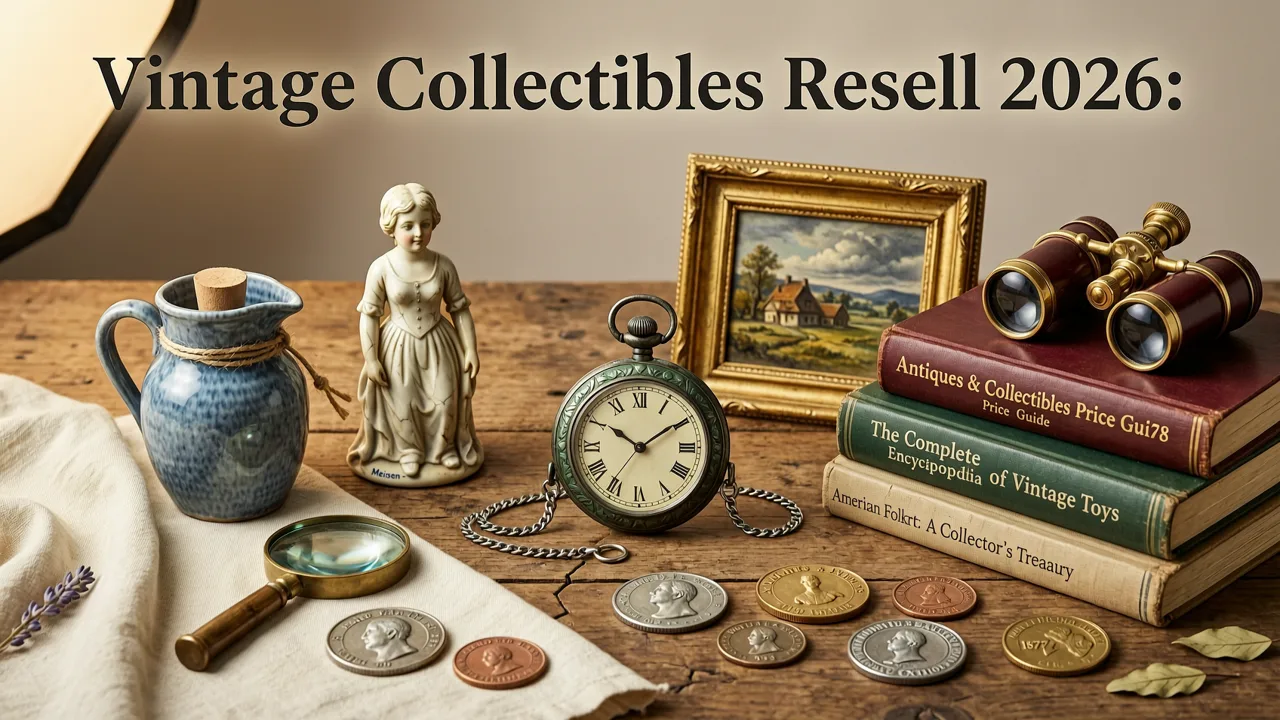
If you have been pulling pieces from estate sales, flea markets, and thrift bins and wondering which ones will actually turn a profit this year, you are not alone. The best vintage collectibles to resell in 2026 are mid-century glassware, vintage costume jewelry, retro electronics, Depression-era dishware, and first-edition paper collectibles — categories that continue to attract strong buyer demand across online marketplaces.
However, "best" does not only mean "most expensive." It means the intersection of reliable sell-through rates, manageable shipping weight, consistent buyer search volume, and a sourcing price low enough to protect your margin. This guide breaks down the categories that meet all four criteria, explains why the resale antique market has shifted this year, and gives you a practical framework for deciding what to buy and what to leave on the shelf.
Why the Resale Vintage Market Has Shifted in 2026
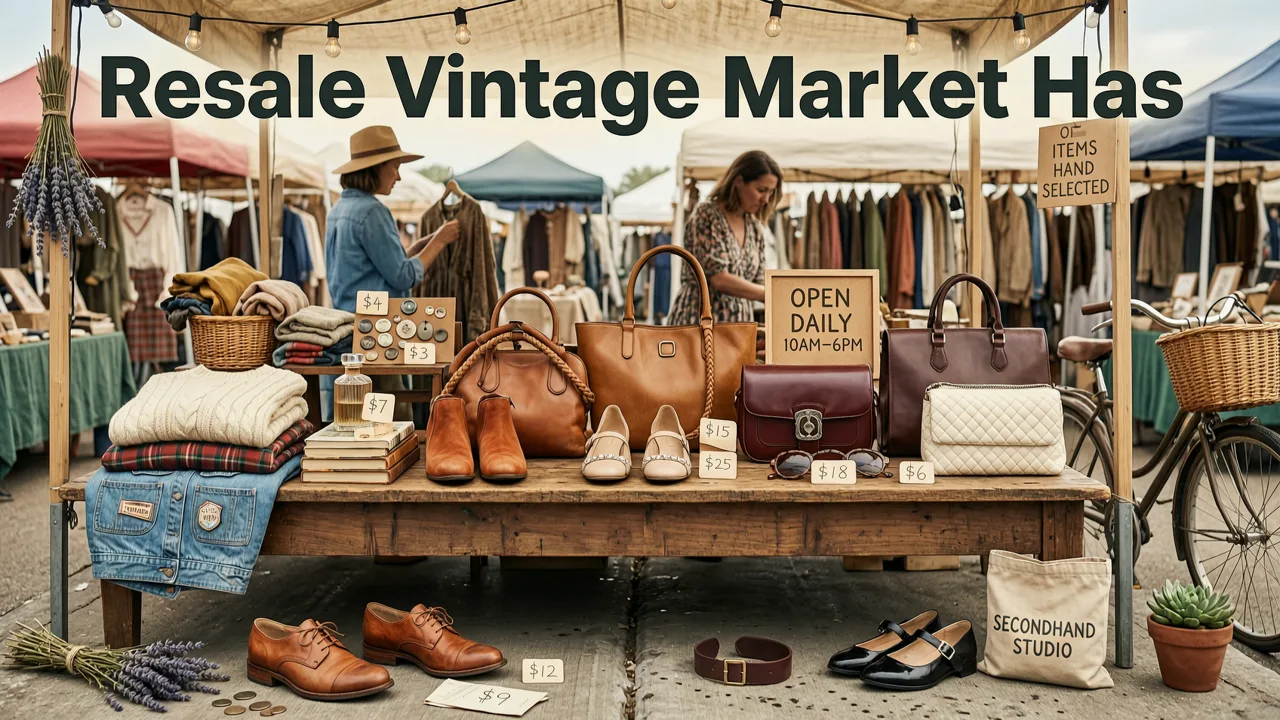
The vintage and antique resale landscape is never static, and 2026 is no exception. Several converging trends have reshaped which collectibles move quickly and which sit in inventory:
- AI-powered identification tools have made it easier for casual sellers to list accurately, raising the overall quality of online listings and pushing serious resellers to differentiate with better photography, detailed descriptions, and verified provenance.
- Millennial and Gen Z buyers now account for a growing share of the collectibles market, favoring mid-century modern aesthetics, bold costume jewelry, and retro tech over heavy Victorian furniture and formal silver sets.
- Marketplace fee structures on major platforms have continued to evolve, making lower-weight, higher-margin items more attractive for resellers who need to protect their bottom line after commissions and shipping.
- Sustainability-driven purchasing keeps vintage goods in demand as buyers seek alternatives to mass-produced new items, particularly in home décor and fashion accessories.
Understanding these shifts helps you source with intention rather than guesswork. If you want a deeper look at how valuation itself has changed this year, our practical guide to estimating antique value covers the five core factors that determine what a piece is worth right now.
How to Evaluate Whether a Vintage Collectible Is Worth Reselling

Before diving into specific categories, it helps to have a quick mental checklist. Every experienced reseller runs through something like this when deciding whether to pick up a piece:
- Can I identify it confidently? If you cannot read the mark, date the pattern, or name the manufacturer, you risk underpricing or overpricing. Use an identification guide or a dedicated AI identifier tool to confirm details before committing.
- Is there active buyer demand? Check completed listings on major marketplaces. You want to see consistent sales over the past 90 days, not just aspirational asking prices.
- What is my all-in cost? Factor in the purchase price, marketplace fees, shipping materials, and your time. A piece that sells for forty dollars but costs you thirty-five dollars in total is not a win.
- Is it shippable? Fragile, oversized, or unusually heavy items eat into margins. The best vintage collectibles to resell in 2026 are generally compact and durable enough to ship without excessive packing costs.
- Does it have condition-sensitive value? Some categories forgive minor wear; others punish it severely. Know the difference before you buy.
Top Vintage Collectible Categories to Resell in 2026
With the evaluation framework in mind, here are the categories delivering the strongest combination of demand, margin, and sell-through velocity this year.
1. Mid-Century Modern Glassware
Mid-century glassware remains one of the most reliable resale categories in 2026. Buyers search for specific patterns and manufacturers — Fostoria, Fire-King, Anchor Hocking, Hazel-Atlas, and Jeanette among them — and they pay premiums for pieces in excellent condition with no chips, cracks, or heavy scratches.
The appeal is twofold: mid-century glassware is visually striking for home décor, and it is lightweight enough to ship affordably. Custard glass, pink depression glass, and certain uranium glass pieces continue to command attention. A complete set in a sought-after pattern can sell for several hundred dollars, while individual cups and saucers in popular colors move quickly at fifteen to forty dollars each.
Sourcing tip: Look for lot sales at estate auctions where glassware is bundled with less desirable items. You can often acquire pieces well below individual resale value.
2. Vintage Costume Jewelry
Vintage costume jewelry has seen sustained demand growth through 2026, driven by fashion-forward buyers, content creators who showcase vintage styling, and collectors who focus on specific makers such as Trifari, Coro, Miriam Haskell, Weiss, and Sarah Coventry.
Key advantages of this category include extremely low shipping costs, high perceived value relative to acquisition cost, and a passionate buyer community that researches purchases thoroughly. Signed pieces from recognized designers consistently outperform unsigned items, though certain unsigned mid-century pieces with distinctive construction or materials still sell well.
What to look for: Maker marks, quality construction (secure stone settings, intact rhinestone foil backs, working clasp mechanisms), and designs that reflect current aesthetic trends. Bold geometric pieces and nature-inspired motifs tend to perform strongest.
3. Retro and Vintage Electronics
Vintage electronics — portable radios, typewriters, early calculators, vintage cameras, and record players — occupy a sweet spot in the 2026 resale market. These items appeal to collectors, interior designers seeking statement pieces, and nostalgia-driven buyers.
Not every vintage electronic device is valuable. The items that sell best are those in working or easily restorable condition, with recognizable brand names (Olympia, Smith-Corona, Braun, Panasonic, Sony) and distinctive mid-century industrial design. Non-working pieces can still sell as décor, but at significantly reduced prices.
Condition matters most here. A working mid-century transistor radio in original cosmetic condition can sell for one hundred to three hundred dollars, while the same model with a dead battery and cracked case may fetch twenty. Test before you buy whenever possible.
4. Depression-Era and Vintage Dishware
Depression glass, vintage Pyrex, and collectible dishware patterns remain steady sellers. Pyrex in rare or discontinued patterns commands particularly strong prices, with some casseroles and mixing bowl sets selling for well over two hundred dollars.
The key to profitability in this category is pattern recognition. Buyers search by specific pattern name, and listings that correctly identify the pattern, colorway, and production era consistently outperform generic "vintage bowl" listings. Condition sensitivity is high — chips, cracks, and heavy utensil scratching reduce value substantially.
5. First-Edition Books and Paper Collectibles
Paper collectibles — first-edition books, vintage maps, postcards, trade cards, and ephemera — offer an often-overlooked resale opportunity. These items are exceptionally lightweight, easy to ship, and can be sourced for very low prices at estate sales and library sales.
Value in paper collectibles depends heavily on condition, scarcity, and subject matter. First editions of notable twentieth-century authors, vintage travel posters, and early advertising ephemera in strong condition can sell for hundreds or thousands of dollars. Even modest pieces — vintage postcard lots, old recipe cards, or local historical documents — move steadily at lower price points.
6. Vintage Fashion and Accessories
Vintage handbags, scarves, hats, and leather goods continue to attract buyers who value craftsmanship and unique style. Mid-century leather handbags from brands like Wilardy, Rialto, and Wilton sell reliably, as do vintage silk scarves from recognized fashion houses.
This category rewards knowledge of labels, materials, and construction quality. A well-made leather bag from the 1950s or 1960s in good condition can sell for seventy-five to two hundred dollars, while designer pieces reach much higher. Authentication knowledge is essential — the line between valuable vintage and unsellable damaged goods is often thin.
Vintage Collectibles Resale Comparison: 2026 at a Glance
The following table summarizes the key factors that make each category attractive for resale this year:
| Category | Avg. Resale Price | Typical Sourcing Cost | Shipping Ease | Sell-Through Speed | Condition Sensitivity |
|---|---|---|---|---|---|
| Mid-Century Glassware | $15 – $300+ | $1 – $20 | High | Fast | Moderate |
| Vintage Costume Jewelry | $20 – $250+ | $1 – $15 | Very High | Fast | Moderate |
| Retro Electronics | $30 – $400+ | $5 – $50 | Moderate | Moderate | High |
| Depression/Vintage Dishware | $10 – $250+ | $1 – $25 | Moderate | Fast | High |
| Paper Collectibles | $5 – $500+ | $0.25 – $10 | Very High | Variable | High |
| Vintage Fashion & Accessories | $25 – $300+ | $2 – $30 | High | Moderate | Moderate |
Sourcing Strategies That Work in 2026
Knowing what to buy is only half the equation. Where and how you source determines whether you can acquire these pieces at prices that leave room for profit.
Estate Sales and Estate Auctions
Estate sales remain the single best sourcing channel for serious vintage resellers. The key is arriving early on the first day for the best selection, then returning on the final day when prices are often reduced significantly. Many estate sale companies use tiered pricing that drops each day, and the last day can yield pieces at a fraction of their resale value.
Thrift Stores and Donation Centers
Thrift stores require more patience and frequent visits, but they offer consistently low prices. Build relationships with store staff, visit on restock days, and learn to scan shelves quickly for maker marks and recognizable patterns. The time investment pays off when you find a piece of vintage Pyrex or signed costume jewelry priced at a few dollars.
Online Wholesale and Lot Purchases
Buying lots on online marketplaces can be profitable if you can accurately assess the value of individual pieces within the lot. This approach works especially well for glassware, costume jewelry, and paper collectibles, where lots are often priced based on the average value of the group rather than the highest-value individual piece.
Garage Sales and Community Sales
Garage sales offer the lowest acquisition costs but require the most legwork. Focus on neighborhoods with older residents, arrive early, and bring cash in small denominations. The pieces you find here often have the highest profit margins because sellers typically have minimal knowledge of current market values.
Pricing Your Vintage Collectibles for Maximum Profit
Pricing is where many resellers leave money on the table — either by underpricing and selling too quickly or by overpricing and watching listings stagnate. The approach that works best in 2026 involves three steps:
- Research completed sales for comparable pieces on major marketplaces. Filter by "sold" rather than "listed" to see actual transaction prices, not aspirational asking prices.
- Adjust for condition. A piece in mint condition should be priced at the higher end of the comparable range. A piece with visible wear, minor damage, or missing components should be priced lower and described honestly.
- Factor in your costs. Your listing price should cover your acquisition cost, marketplace fees, shipping materials, shipping cost (if you offer free shipping), and a reasonable profit margin. If the math does not work, reconsider the purchase.
For a more detailed walkthrough of valuation methodology, including how to handle pieces that are difficult to research, our guide to estimating antique value provides a structured approach you can apply to any category.
Listing Best Practices That Drive Sales
Even the most valuable vintage collectible will not sell if the listing fails to communicate its worth. In 2026, buyer expectations for online listings are higher than ever. Here is what separates listings that convert from those that languish:
- Use natural light and multiple angles. Show the front, back, base, maker marks, and any flaws. Buyers who feel they have complete visual information are more confident in purchasing.
- Include measurements. Dimensions prevent returns and reduce pre-sale questions. Measure in inches and centimeters.
- Identify the maker, pattern, and era. Specific, accurate identification signals expertise and justifies premium pricing. If you are unsure, use identification resources or the Antique Identifier app before listing.
- Describe condition honestly. Note every chip, scratch, repair, or discoloration. Transparency builds trust and reduces disputes.
- Use relevant keywords in your title. Include the maker name, pattern name, color, era, and item type. Avoid keyword stuffing, but make sure a buyer searching for that specific piece will find your listing.
Common Mistakes New Resellers Should Avoid
Even experienced resellers make errors, but certain mistakes are particularly costly for those new to the vintage resale market:
- Buying without researching. The excitement of a potential find can lead to overpaying. Always check completed sales before purchasing.
- Ignoring shipping costs. A piece that costs five dollars to source but forty dollars to ship safely may not be worth listing at a low price point.
- Overestimating condition. Being honest about flaws protects your seller rating and prevents returns. Buyers who feel misled will leave negative feedback that affects future sales.
- Storing items improperly. Vintage glassware, paper, textiles, and leather all require specific storage conditions to prevent deterioration. Improper storage can turn a profitable piece into a loss.
- Failing to identify pieces accurately. Listing a reproduction as vintage or misidentifying a pattern damages credibility and can result in disputes. When in doubt, seek expert opinion or use professional identification tools.
When to Get a Professional Appraisal
Not every piece you encounter needs a professional appraisal, but certain situations call for one. If you suspect a piece may be worth significantly more than you can determine through online research — particularly high-value furniture, fine art, silver, or jewelry with precious stones — a professional appraisal provides the documentation and confidence needed to price accurately or insure the piece.
Our guide on how to get antiques appraised for free outlines legitimate options that do not require expensive consultation fees, including auction house evaluation days, online appraisal services, and museum resources.
Building a Sustainable Vintage Resale Business
The resellers who thrive long-term treat their operation as a business, not a hobby. This means tracking inventory, monitoring profit margins by category, reinvesting in sourcing, and continuously building identification knowledge. The best vintage collectibles to resell in 2026 will shift as buyer preferences evolve, but the fundamentals — accurate identification, honest condition reporting, fair pricing, and excellent customer service — remain constant.
Specialization also pays dividends. Resellers who focus deeply on one or two categories develop the expertise that allows them to spot undervalued pieces others miss, price accurately, and build a reputation that attracts repeat buyers. Whether you focus on mid-century glass, vintage jewelry, or paper collectibles, depth of knowledge is your competitive advantage.
Final Thoughts: Start Sourcing with Confidence
The vintage resale market in 2026 rewards knowledge, preparation, and honest dealing. The categories outlined above represent the strongest opportunities for resellers seeking reliable margins and fast sell-through, but success ultimately depends on your ability to identify pieces accurately and price them appropriately.
Before your next sourcing trip, arm yourself with the right tools. The Antique Identifier app helps you confirm maker marks, date patterns, and estimate value in seconds — right from your phone. Download it today and turn every estate sale, thrift store visit, and flea market trip into a more profitable outing.
Related resources
Frequently Asked Questions
What are the most profitable vintage collectibles to resell in 2026?
The most profitable vintage collectibles to resell in 2026 include mid-century glassware, vintage costume jewelry, retro electronics, Depression-era dishware, first-edition paper collectibles, and vintage fashion accessories. These categories combine strong buyer demand, manageable shipping costs, and sourcing prices that leave room for healthy profit margins.
Where is the best place to source vintage collectibles for resale?
Estate sales and estate auctions offer the best combination of selection and pricing for vintage resellers. Thrift stores, garage sales, community sales, and online lot purchases are also effective sourcing channels. The key is visiting frequently, building relationships with sellers, and learning to identify valuable pieces quickly.
How do I determine the resale value of a vintage collectible?
Research completed sales on major online marketplaces for comparable pieces, adjusting for condition, maker, pattern, and era. Filter by sold listings rather than active listings to see actual transaction prices. For difficult-to-value pieces, consider using an AI identification tool or seeking a professional appraisal.
Is vintage costume jewelry still worth reselling in 2026?
Yes, vintage costume jewelry remains one of the strongest resale categories in 2026. Signed pieces from makers like Trifari, Coro, Miriam Haskell, and Weiss command premium prices, and the category benefits from extremely low shipping costs, high perceived value, and consistent buyer demand across multiple marketplaces.
What condition issues most affect vintage collectible value?
Condition sensitivity varies by category, but the most common value-reducing issues include chips and cracks in glassware and dishware, missing stones or broken clasps in jewelry, non-working mechanisms in electronics, stains and tears in textiles, and foxing or creasing in paper collectibles. Always describe condition honestly in your listings.
Related Articles


Explore more practical antique identification and appraisal guides.
View all articles